

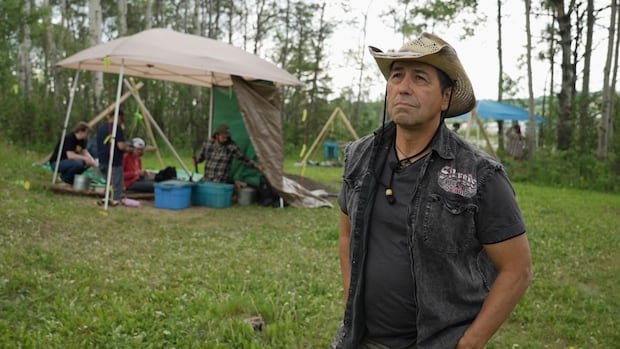

An educational program at a national historic site near Fort St. John, B.C., is providing insights into 12,500 years of First Nations history through the discovery of ancient stone tools and animal remains. Tse’k’wa, owned by Doig River, Prophet River, and West Moberly First Nations, has been a significant site for the Dane-zaa people over generations.
The archaeological significance of Tse’k’wa, one of more than 57,000 known archaeological sites in the region, sheds light on the rich history of human settlement in North America dating back to the last ice age. The site serves as a platform for the nations to share their cultural heritage and language with the public.
While the site is open for public visits, the actual excavation work is carried out by students from the University of Northern British Columbia. Elder Laura Webb of West Moberly First Nations emphasized the importance of Tse’k’wa as a cultural hub, where ancestral teachings and practices are shared with visitors.
The artifacts found at Tse’k’wa, including stone tools, animal bones, obsidian fragments, and a 10,500-year-old stone bead, provide valuable insights into the ancient ways of life of the Dane-zaa people. Garry Oker, an elder from Doig River First Nation, highlighted the connection between the discovered artifacts and the oral traditions passed down through generations.
The Tse’k’wa Heritage Society, established in 2012 by the three nations, aims to preserve the site as an interpretive center for cultural teachings and community gatherings. The name “Tse’k’wa” in Dane-zaa Záágéʔ, meaning “rock house,” refers to the cave located at the site, which holds significant historical and cultural value for the Dane-zaa people.
Alyssa Currie, the executive director of the Tse’k’wa Heritage Society, noted that the site has been a focal point for cultural practices spanning 500 generations of Dane-zaa ancestors. The archaeological findings at Tse’k’wa provide tangible evidence of the enduring presence and heritage of the Dane-zaa people in the region.