

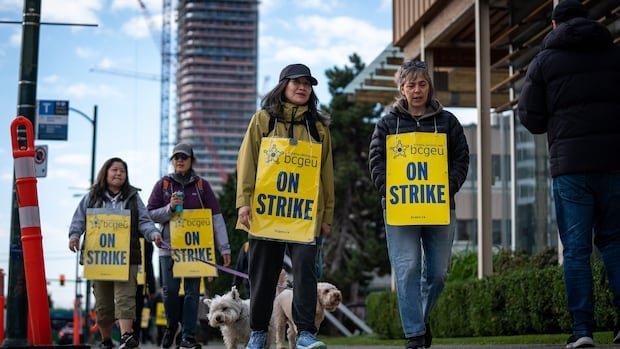

The B.C. General Employees’ Union (BCGEU) has reached a preliminary agreement with the provincial government, potentially bringing an end to the lengthy strike affecting various sectors like liquor distribution and wildfire fighting. The Professional Employees Association (PEA) has also declared the suspension of their picket lines to resume negotiations with the B.C. government.
Over 25,000 BCGEU workers and more than 1,600 PEA workers have been involved in some form of job action since September 2. Both unions are set to return to work on Monday as the BCGEU’s tentative deal, which includes a three percent annual wage increase over the next four years, awaits ratification.
BCGEU President Paul Finch expressed satisfaction with the tentative agreement, emphasizing the hard-fought victory for the members and working people in B.C. The proposed deal addresses key issues such as wages and affordability, pending approval from the 34,000 public service workers affected by the strike.
The strike had disrupted government services, including programs like student loans, IVF funding, and correctional services. The agreement aims to enhance working conditions for telework and remote workers while providing targeted pay raises for the lowest-paid public servants.
The ratification process details will be communicated to members in the coming week, with the voting process scheduled to commence the following week. A majority vote in favor of the agreement is required for ratification, according to Finch.
The BCGEU’s previous contract expired on March 31, leading to the strike as workers demanded improved wages and working conditions amid rising living costs. The union’s request for a four percent annual wage increase clashed with the government’s efforts to manage a significant deficit.
Negotiations between the union and the government faced multiple collapses during the strike, with Finance Minister Brenda Bailey emphasizing the importance of a fair agreement for all British Columbians. Mediation led by Vince Ready and Amanda Rogers was initiated on October 17 to resolve the strike.
Bailey expressed satisfaction with the tentative agreement but refrained from further comment until the ratification process is completed. David Hannah, a professor at Simon Fraser University, suggested that the BCGEU deal could serve as a model for other unions negotiating with the B.C. government.
The PEA, representing licensed professionals working for the province, has also suspended picketing to resume bargaining with the government, mirroring the terms agreed upon by the BCGEU. Melissa Moroz, the PEA’s executive director and lead negotiator, highlighted progress on key priorities as negotiations continue.