

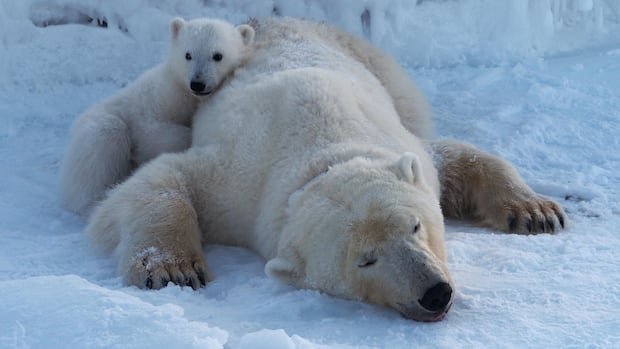

A solitary polar bear swimming in an ice-free Arctic has become a symbol of the impact of a warming climate on wildlife. However, in the Barents Sea north of Norway, the polar bears seem to be faring well, at least for now.
Contrary to expectations, a recent study published in Scientific Reports reveals that the decades-long decline in sea ice and the increasing number of ice-free days in the region have not significantly affected the health of this particular subpopulation of polar bears. Co-author Andrew Derocher, a professor of biological sciences at the University of Alberta, noted that the bears in the area are managing to adapt to the changing environment and maintain their food sources.
Despite being closely associated with the effects of human-induced climate change, polar bears demonstrate a variability in responses within populations. Marie Auger-Méthé, a statistical ecologist at the University of British Columbia, emphasized that while some species may benefit from changing conditions, the long-term loss of sea ice remains a serious threat to polar bears globally.
The study, based on data from live captures of bears in the Svalbard archipelago between 1995 and 2019, sheds light on the resilience of this specific group of polar bears. The researchers conducted capture-mark-and-recapture expeditions involving 770 bears, providing insights into their body conditions and overall health.
Despite facing earlier ice breakup and longer ice-free periods after 2005, the polar bears in the Svalbard area showed a surprising ability to maintain their body conditions. This resilience could be attributed to the bears diversifying their diet to include alternative prey such as walruses, bird eggs, and whale carcasses, which have become more accessible due to changing environmental conditions.
While the findings offer a glimmer of hope for the Barents Sea polar bears, experts caution that the success observed in this subpopulation may not be mirrored in other regions. The challenges faced by polar bears in Canada, particularly in the western Hudson Bay and the Beaufort Sea, highlight the ongoing threats posed by diminishing sea ice and dwindling food sources.
As climate change continues to impact polar bear habitats worldwide, the future of these iconic creatures remains uncertain. The adaptability of the Barents Sea polar bears underscores the complex interplay between environmental changes and wildlife survival, leaving researchers intrigued yet wary of the challenges that lie ahead.