

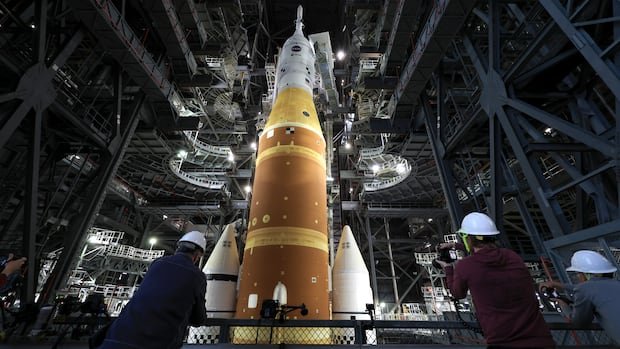

The launch of the Artemis II mission, initially set for February 8, has been postponed by at least a month due to a hydrogen leak discovered during tank fuelling. Similar delays were encountered during the first Artemis mission because of fuel leaks.
Liquid hydrogen and liquid oxygen, the components of rocket fuel, possess extraordinary properties, remaining in liquid form despite being extremely cold. These cryogenic liquids have boiling points well below freezing, with liquid hydrogen nearing absolute zero at -253 C, instantly freezing upon contact.
Handling such frigid liquids requires specialized equipment capable of withstanding drastic temperature differentials between the fuels and the launch environment in Florida. The core stage of the Space Launch System (SLS) rocket is coated in insulating foam to safeguard the cold fuel from the warmth, with pre-chilling of fuel lines and tanks being necessary to prevent premature boiling.
The cryogenic nature of the fuels, coupled with vapor pressure, naturally leads to leaks. Hydrogen, being the smallest molecule, can escape through even the tiniest openings, posing challenges for the SLS rocket’s fuel system.
Efforts to mitigate leaks involve storing the fuels near the launch pad, piping them through tall towers and hoses to the rocket, and pre-chilling components to prevent premature fuel vaporization. Recent leak incidents have been traced to connectors at the launch tower, leading to delays in prior missions.
Engineers are working to address the current leak on-site to avoid extensive delays, with a subsequent wet dress rehearsal planned before the new launch date of no earlier than March 6.
While hydrogen leaks have plagued the space program, NASA continues to use it due to its high thrust-to-weight ratio, essential for heavy lift vehicles like the SLS rocket. SpaceX and the Russian space program have opted for kerosene over liquid hydrogen for ease of handling.
The future of the SLS rocket hinges on resolving technological challenges, such as hydrogen leaks, while balancing the costs associated with its disposable nature against the imperative of sustaining jobs tied to its production. Critics argue that the SLS is economically unsustainable compared to reusable rockets used by private companies.