

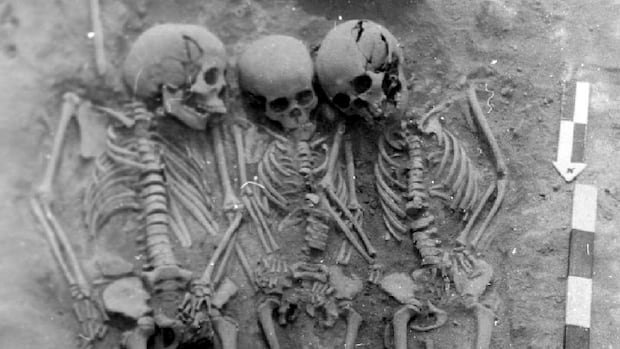

Scientists have unraveled a long-standing enigma surrounding the burial of numerous deceased children by ancient hunter-gatherers in Russia 5,500 years ago. The mystery has been solved as they were victims of the earliest documented plague outbreak, shedding new light on the disease.
The study, recently published in Nature by an international research team that includes Canadian scientists, highlights that the bacterium Yersinia pestis, infamous for causing the Black Death in Europe during the 14th century, was already lethal to humans millennia earlier. Furthermore, it was capable of spreading among hunter-gatherer societies, not just confined to densely populated settlements that emerged later.
Lead author of the study, Ruairidh Macleod, a postdoctoral researcher at Oxford University, expressed astonishment at the early evidence of large-scale fatal plague outbreaks among these ancient communities. The researchers, including Andrzej Weber and Angela Lieverse, have been investigating remains from a prehistoric hunter-gatherer society near Lake Baikal in Russia for years.
Weber, a professor of anthropology at the University of Alberta, heads the Baikal Archeology Project, which has delved into the lives of ancient inhabitants who resided near the lake and the Angara River. Lieverse, a professor of archaeology at the University of Saskatchewan, noted the unusual discovery that a significant portion of the burials at one site comprised children under 12 years old, posing a perplexing question until now.
Lieverse, specializing in the study of human bones, meticulously examined the skeletal remains to determine age, sex, and signs of disease. Collaborating with Macleod, an ancient DNA expert, they identified the presence of the plague-causing bacteria, offering a breakthrough in understanding the ancient epidemic.
The researchers found that the plague strain responsible for the outbreak had a unique characteristic, a “superantigen,” which triggered severe inflammatory reactions, particularly affecting children due to their distinct immune systems. Interestingly, this strain lacked the genes necessary for the bubonic plague to spread via fleas.
The Lake Baikal outbreak, impacting multiple family groups, suggested human-to-human transmission, with tragic consequences for children in these communities. The discovery of siblings and cousins succumbing to the disease underscores the devastating toll it took on these ancient populations.
This revelation not only provides insights into the evolution of deadly pathogens like the plague but also serves as a poignant reminder of the human tragedy that unfolded in the past. Lieverse emphasized the emotional impact of uncovering the story of these young victims, offering a powerful glimpse into the ancient past.