

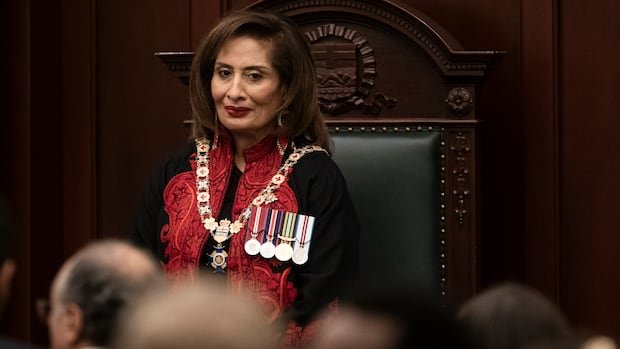

Alberta’s government aims to eliminate the geographical constraints on the oilsands by collaborating with partners to construct pipelines extending to British Columbia’s northwest coast and Ontario, as per Lt.-Gov. Salma Lakhani’s remarks in the throne speech marking the commencement of a new legislative session. The speech underscores the successful efforts to emphasize the significance of marketing Alberta’s natural resources to the rest of Canada and reiterates the commitment to doubling oil and gas production, without specifying a timeline. Emphasizing Alberta’s diplomatic strategy in addressing U.S. tariff concerns, the speech expresses confidence in prevailing in the quest for provincial rights and freedom.
The speech clarifies that Alberta’s pursuit of sovereignty does not entail separation but emphasizes the necessity of striking a “grand bargain” with the federal government to restore economic autonomy. Following a Liberal victory in the federal election in April, discussions around separatist sentiments in Alberta emerged, leading to a citizen-initiated petition that could trigger a referendum on Alberta’s continued inclusion in Canada. A pro-separatist group is currently engaged in legal battles to secure approval for a pro-separation referendum question from Elections Alberta.
Premier Danielle Smith introduced the government’s inaugural bill of the session, the International Agreements Act, which stipulates that international agreements signed by Ottawa will only become enforceable in Alberta if implemented under provincial legislation. The bill, inspired by a Quebec law dating back 25 years, seeks to expand the scope of Alberta’s existing legislation on international trade and investment agreements to encompass all international agreements within Alberta’s jurisdiction or shared national-provincial jurisdiction.
The speech highlights the challenges posed by diminished oil and gas royalty revenues, resulting in a fiscal deficit for Alberta this year. However, the province’s strategy to enhance the value of the Heritage Fund and promote economic diversification aims to reduce reliance on these revenues in the future. Alberta is positioned not only as an energy superpower but also as an artificial intelligence (AI) superpower, with ambitions to lead in the critical realms of energy and computing power globally.
Moreover, the speech underscores the government’s commitment to seize more provincial control over immigration, emphasizing a return to a stable influx of primarily economic migrants to contribute to Alberta’s economy. The government plans to introduce a bill to incorporate markers for Canadian citizens on Alberta driver’s licences and identification cards by the following year. The speech reaffirms the government’s existing initiatives, including the development of a passenger rail system, recruitment of additional police officers, restructuring of healthcare administrative bodies, and a comprehensive plan to construct and upgrade 130 school buildings over seven years.
In response to the throne speech, Alberta NDP Leader Naheed Nenshi criticized the lack of focus on improving public services, healthcare, and affordability, particularly in light of ongoing teacher strikes. Nenshi expressed concerns that the government’s flagship legislation, Bill 1, could divert attention from pressing concerns and potentially face constitutional challenges if enacted. Independent MLA Pete Guthrie criticized Bill 1, accusing the government of prioritizing political interests over the province’s welfare.