

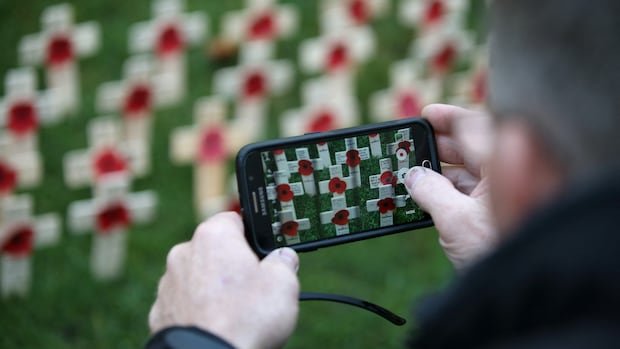

Remembrance Day serves as a time for reflection on war, sacrifice, and historical memory. However, in today’s digital era, conflicts are no longer just historical events but are constantly streamed to our smartphones, creating an ongoing information battleground.
The exposure to live streams of conflicts in various regions like Ukraine, Gaza, and Sudan has transformed individuals into direct witnesses, often unintentionally engaging in this endless cycle of information warfare influenced by echo chambers and algorithms. This constant exposure to diverging narratives and violence may alter how we perceive and remember these events, according to experts.
Psychology professor Steve Joordens from the University of Toronto Scarborough highlights the shift from a shared collective memory established through traditional Remembrance Day ceremonies to personalized news feeds that present individuals with different sets of information. This personalized exposure can lead to what he terms as a “shallow memory,” impacting how our brains process and retain information.
Dr. Katy Kamkar, a clinical psychologist at Toronto’s Centre for Addiction and Mental Health, notes the rise of “digital war fatigue” characterized by a mix of desensitization, learned helplessness, and compassion burnout due to the continuous exposure to traumatic events. This emotional overload can physiologically affect individuals, making them react to war as if they are living through it.
The proliferation of distressing images and manufactured outrage in our digital feeds contributes to increased stress levels and emotional shutdown, as explained by Joordens. This prolonged exposure to stress hormones can impede the formation of deep memories, leading to an amnesiac-like state.
Experts like Marcus Kolga, a foreign policy analyst, and former Canadian Armed Forces officer Jay Janzen emphasize the impact of modern information warfare on societal trust and resilience. With the rapid dissemination of both truths and lies through AI-driven platforms, public trust is eroded, and reality becomes fragmented, fostering cynicism and division.
To combat these challenges, experts advocate for regulatory measures to promote transparency in online platforms and urge individuals to set boundaries on their media consumption, seek context over sensationalism, and foster genuine connections to ground empathy. They stress the importance of long-term civic education and social trust to build resilience against the manipulation of information and emotions in the digital age.
As the boundaries between facts and fiction blur and empathy wanes, the act of remembrance itself risks being overshadowed by the ongoing attention war in our digital society.