

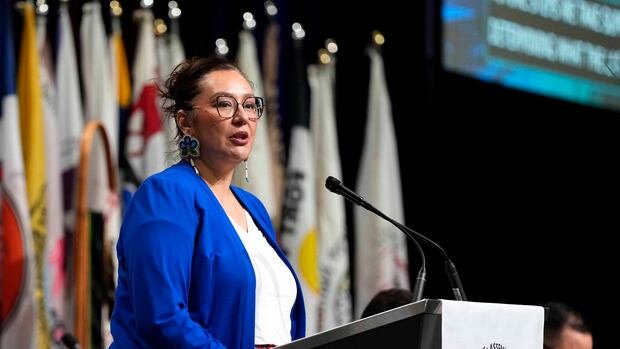

Indigenous Services Minister Mandy Gull-Masty emphasized that the Assembly of First Nations has urged her government to address the issue of the second-generation cut-off in the Indian Act. However, she stressed that any changes in this regard would only be implemented after extensive consultations with leaders.
During a recent special assembly in Ottawa, First Nations chiefs voted to endorse Senate amendments to a government bill aimed at broadening eligibility under the Indian Act by removing the second-generation cut-off. This provision currently prevents individuals from registering for status under the law if their parent and grandparent did not hold status.
The resolution, which received unanimous support at the Assembly of First Nations meeting in Ottawa, also includes a call for increased funding from Ottawa to help offset the costs incurred by communities in accommodating new members.
The Assembly of First Nations serves as an advocacy group for 600 First Nations chiefs who convene biannually to address various issues and pass resolutions instructing the executive committee on advocacy strategies.
Notably, several resolutions from past AFN assemblies have advocated for the elimination of the second-generation cut-off. Minister Gull-Masty highlighted her obligation to engage with chiefs and solicit alternative suggestions before making any decisions related to this matter.
Bill S-2, initially introduced in the Senate with backing from the Liberal government, was crafted to address gender disparities in the Indian Act and potentially grant around 6,000 individuals eligibility for Indian status. Senators amended the bill to scrap the second-generation cut-off, which originated from a 1985 revision to the Indian Act.
Chiefs expressed concerns that the cut-off could jeopardize their communities’ recognition in the future, effectively jeopardizing their rights as a distinct group. Chief Wilfred King of Gull Bay First Nation emphasized that those who stand to benefit from the removal of the cut-off are closely connected to their communities and are not strangers but integral community members.
In conclusion, Minister Gull-Masty stressed the importance of consulting with First Nations leaders before making any legislative changes. She acknowledged the financial implications of expanding status eligibility, as increased federal recognition would necessitate higher per-capita funding for First Nations communities.