

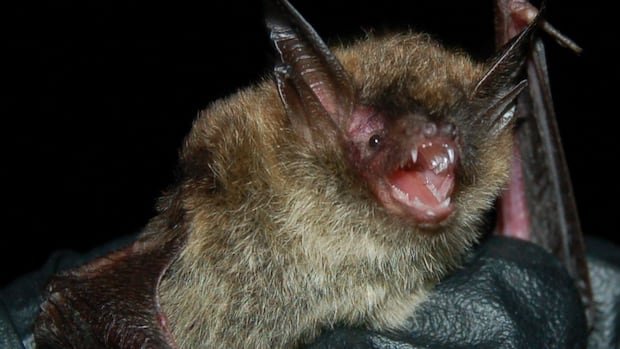

Despite the common aversion to bats, an environmental group in Sudbury aims to shift that sentiment towards curiosity by investigating the local bat population of the city.
The Junction Creek Stewardship Committee recently organized a “bat walk” at Park Lawn Cemetery, encouraging individuals to participate in the search for these nocturnal creatures.
Given the challenges of observing bats due to their nocturnal activity, participants utilized iPads equipped with echometers to detect the high-frequency sounds produced by bats through echolocation.
Evan Voutier, an ecological technician with the committee, expressed the high level of interest in bats in the Sudbury region.
Voutier highlighted the lack of comprehensive bat research in the area and emphasized the committee’s commitment to conducting research while involving the public in their efforts to demonstrate their methodologies.

The Junction Creek Stewardship Committee is investigating the various habitats utilized by bats across Greater Sudbury.
“We are not solely focusing on optimal habitats but also exploring areas with some habitat disturbances to understand the impact on bat populations and the diversity of bat species in these locations compared to others,” Voutier elaborated.
One prevalent habitat in northern Ontario is abandoned mines, which serve as hibernation sites for certain bat species during winter.
Declining Bat Populations
Franco Mariotti, a biologist and naturalist volunteering for the group, emphasized the importance of studying local bat populations due to ongoing threats.
Mariotti pointed out the endangerment of bats caused by white-nose syndrome, a fungal disease that has led to significant declines in bat populations throughout North America. The syndrome disrupts the hibernation of bats, causing them to deplete their energy reserves and starve before spring.
Additionally, certain bat species face risks from wind turbines as the swift changes in air pressure near spinning blades can lead to gas bubble formation in body fluids, akin to decompression sickness, resulting in severe internal injuries and fatalities, according to Mariotti.
Despite the decline in bat populations, Mariotti indicated that research by the group reveals the continued presence of bats throughout the Sudbury area.

“Out of the eight species of bats in Ontario, all eight are found in Junction Creek,” he remarked.
“This is an incredible discovery we’ve made in the past year, demonstrating that all bat species in Ontario can be found right here in downtown Sudbury.”
Mariotti underscored the vital role of bats as primary predators of insects, aiding in the