

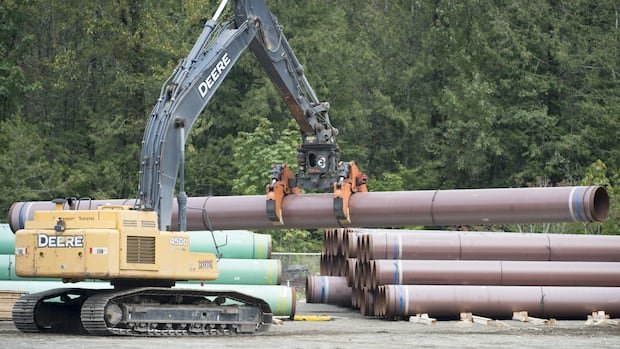

A recent report from TD Economics suggests that a proposed new oil pipeline to the West Coast could have a positive impact on Canada and Alberta’s economies, although the projected benefits may not be as high as estimated by government officials. The analysis forecasts a potential 0.6% increase in the national GDP by the 2040s, with Alberta’s economy potentially seeing a 3.5% growth.
Economists Marc Ercolao and Likeleli Seitlheko caution that these figures, while informative, should be considered optimistic as they are based on estimates provided by project supporters and governments with vested interests. Taking a more conservative approach, the economists suggest that the actual impact could be closer to a 0.3% national boost and a 2% provincial increase.
Despite the potential for lower-than-expected growth, the economists highlight that the pipeline project could still significantly contribute to economic expansion, especially when considering improved market access and export diversification. Alberta recently submitted its application for the pipeline project, which aims to deliver one million barrels of oil per day to the West Coast, to the federal major projects office.
The pipeline, to be constructed and managed by the Crown-owned Trans Mountain Corp, is estimated to cost between $35 billion and $44 billion. Currently, the majority of the funding, around 90%, is expected to be provided by the federal and provincial governments, with Pembina Pipeline Corp. holding a 10% stake.
The proposed pipeline route, which largely mirrors the existing Trans Mountain line to a port south of Vancouver, could increase Canada’s oil exports by 20% and more than double the current volume shipped to Asia. This expansion aligns with Alberta’s strategy to enhance market access and tap into growing Asian demand for Canadian oil.
While the potential for increased exports to Asia is promising, the TD economists advise caution due to factors such as a projected plateau in Asian oil demand, driven by factors like the rise of electric vehicles and a global shift towards cleaner energy sources. Additionally, Canadian oil may face competition from other sources like Russian crude.
The Alberta government anticipates that the pipeline will be deemed a project of national significance in the coming months, with construction tentatively scheduled to commence by late 2027.