

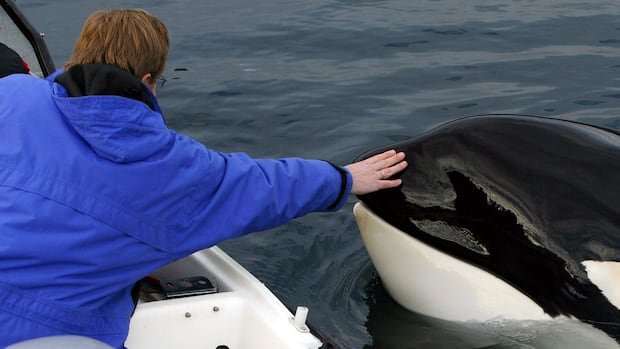

A North Atlantic right whale, Division, was discovered deceased in U.S. waters this week, caught in fishing gear. This incident marks the first entanglement fatality of 2026, as reported by the Canadian Whale Institute.
The U.S. National Oceanic and Atmospheric Administration (NOAA) disclosed in a news release on Friday that a right whale carcass was sighted by an aerial survey team approximately 40 kilometers off the coast of Avon, N.C., on Jan. 27.
Validation by scientists from the New England Aquarium confirmed the identity of the deceased whale as Division, a male aged four years. The whale was found with a fishing line entwined around its head and mouth, causing severe injuries to its blowhole and upper jaw.
North Atlantic right whales are categorized as critically endangered, with the population standing at fewer than 400 individuals. The main causes of mortality for these whales in U.S. and Canadian waters are entanglements and vessel strikes, according to the NOAA.
Tonya Wimmer, the executive director of the Marine Animal Response Society, emphasized the importance of each animal’s survival in contributing to the recovery of the endangered species.
Division was initially spotted entangled over a month prior, on Dec. 3, with indications of deteriorating health due to prolonged entanglement. Efforts to remove some fishing gear in December were hindered by adverse weather conditions and the whale’s distance from shore, preventing a complete disentanglement. The last sighting of Division alive was on Jan. 21.
The New England Aquarium noted that Division’s death marks the first confirmed mortality of a North Atlantic right whale since May 2024. Wimmer expressed distress over witnessing the visible effects of entanglement on Division, highlighting the urgency to prevent such incidents.
Due to hazardous weather conditions and location, the NOAA stated that retrieving the carcass or conducting a necropsy would not be feasible. However, federal authorities intend to analyze the fishing gear removed from the whale.
Division had three previous documented entanglements over the years, according to the New England Aquarium. These whales are known to frequent Atlantic Canadian waters for feeding, with Division often sighted in the Gulf of St. Lawrence in New Brunswick.
Despite the loss of Division, there is optimism for the species as more than 21 calves have been born since the start of the calving season in November, surpassing the 11 calves born in the 2025 season. Wimmer emphasized the resilience of the species and the need to address preventable threats.
By: CBC News