

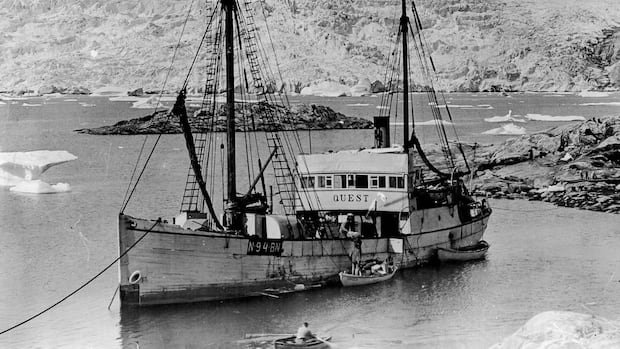

An underwater expedition funded by the Royal Canadian Geographical Society (RCGS) is set to investigate the wreckage of the Quest, a ship that sank in 1962 in the Labrador Sea. Utilizing cutting-edge Canadian technology from Voyis, the team aims to create a detailed digital twin of the vessel, which was the final voyage of renowned Antarctic explorer Sir Ernest Shackleton. The expedition will also survey Terra Nova, the ship that transported British explorer Robert Falcon Scott to Antarctica.
CBC News will cover the expedition exclusively as the research vessel Atlantis embarks on a 21-day journey from Woods Hole Oceanographic Institute in Massachusetts on July 2. This initiative reflects a shift in underwater archaeology towards digitally documenting shipwrecks rather than physical recovery.
Describing the expedition as a “once-in-a-generation” opportunity, co-chief scientist David Mearns highlights the historical significance of exploring Quest and Terra Nova. Shackleton, who perished aboard the Quest near South Georgia in 1922, was a prominent figure in Antarctic exploration. The Quest continued in service for several decades before sinking off the coast of Labrador.
The Quest lies approximately 400 meters below the surface near Labrador’s south coast, while Terra Nova rests in about 170 meters of water south of Greenland. Discovered in 2024, the shipwreck offers valuable insights that researchers hope to uncover during the RCGS expedition.
The expedition team will use advanced imaging technology, including lasers and stereo cameras, to create a comprehensive three-dimensional model of the ship and its surrounding debris field in real-time. This approach, known as photogrammetry, enhances safety and precision compared to traditional diver-based surveys. The technology provided by Voyis, known for its work on other famous shipwrecks like the Titanic and Endurance, enables researchers to explore and analyze the wrecks in detail.
Despite the excitement surrounding the expedition, challenges such as strong currents and poor visibility at depths of 400 meters present risks to the success of the mission. The team must navigate these obstacles while piloting the remote operated vehicle to capture essential data for reconstructing the ship digitally.
The voyage to investigate these historic shipwrecks represents a significant step in underwater exploration, showcasing the application of cutting-edge technology to uncover maritime history and preserve it for future generations.