

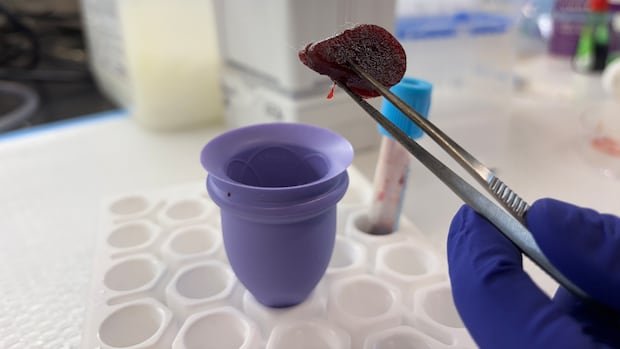

Close to 25% of the global population undergo menstruation, yet advancements in menstrual products have been limited, stated a researcher from McMaster University. Zeinab Hosseinidoust, a professor in the chemical engineering department at the university in Hamilton, highlighted the potential for innovation in this domain. Collaborating with associate professor Tohid Didar, Hosseinidoust developed smart tablets designed to enhance the accessibility of menstrual cups and reduce associated inconveniences.
According to UN Women, a United Nations agency advocating for gender equality and women’s empowerment, more than two billion individuals worldwide menstruate. In Canada, one out of six menstruating individuals has faced period poverty, with an average lifetime spending of approximately $6,000 on menstrual products. Additionally, a quarter of Canadians believe periods are unsanitary, as per federal government research.
Menstrual cups have gained popularity due to their eco-friendly nature and cost-effectiveness, as they can be reused for extended periods. Hosseinidoust delved into social media comments to understand why some individuals were hesitant to adopt menstrual cups, discovering concerns about potential messiness.
Dior David, a student at McMaster University, praised the concept of the smart tablets, emphasizing the convenience they offer in public restrooms. Jennifer Abraham, another university student, applauded innovations in the menstrual industry, emphasizing the importance of diverse product options and education to empower individuals to make informed choices.
The single-use tablets, crafted from biodegradable and flushable seaweed-based materials, while slightly deviating from the sustainability and cost-efficiency goals of menstrual cups, serve as a potential game-changer in menstrual health. These tablets not only address environmental concerns but also hold promise in detecting and preventing infections like UTIs and bacterial vaginosis.
Hosseinidoust’s research on bacteriophages, viruses targeting harmful bacteria, aims to integrate them into menstrual products to combat infections effectively. This groundbreaking work has the potential to revolutionize various products beyond the smart tablets.
In conclusion, the development of innovative menstrual products represents a significant advancement in addressing longstanding gaps in the field. Hosseinidoust views this work as a pivotal opportunity for progress and change in menstrual health innovation.