

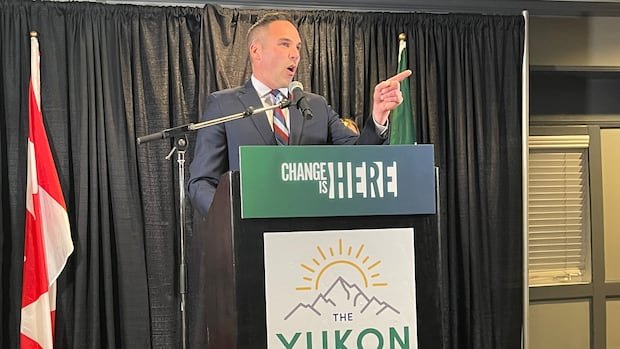

Currie Dixon’s Yukon Party emerged victorious in the territorial election held on Monday, securing a majority government and ending nine years of Liberal rule in the Yukon. Dixon expressed his gratitude for the support received, emphasizing the significance of the win and the desire for change expressed by the voters.
The Yukon Party was projected to claim victory in 14 out of the 21 ridings, signaling a clear mandate for the party’s vision. Kate White’s NDP also made significant gains, securing six seats and transitioning to the Official Opposition from a third-party status.
Dixon, at 40 years old, will become the 12th premier of the Yukon and the first premier born in the territory. Throughout the campaign, key issues such as healthcare, housing, community safety, and the cost of living took center stage. In his victory speech, Dixon reiterated his commitment to addressing these concerns and ushering in a new era of progress.
White, reflecting on her party’s performance, highlighted the challenges faced by Yukoners in areas like affordability, healthcare access, and education. As the new Official Opposition, White affirmed her dedication to holding the government accountable and ensuring that the needs of the people are met.
The election also saw a significant endorsement of electoral reform by Yukoners, with a majority voting in favor of switching to a ranked ballot system. However, the results of the plebiscite are not binding on the incoming government, with Dixon indicating a reluctance to change the voting system regardless of the outcome.
In terms of legislative seats, all Yukon Party MLAs seeking re-election successfully retained their positions, including former cabinet ministers such as Brad Cathers, Scott Kent, and Wade Istchenko. Notably, the Yukon Party also secured seats previously held by the Liberals, underlining the shift in political landscape following the election.
Overall, voter turnout witnessed a decline compared to previous elections, with 53% of registered electors casting their ballots. Despite this, the election marked a significant shift in power dynamics within the Yukon’s political arena, setting the stage for a new chapter in governance.
For more detailed coverage of the Yukon territorial election, visit CBC North’s dedicated section on the event.