

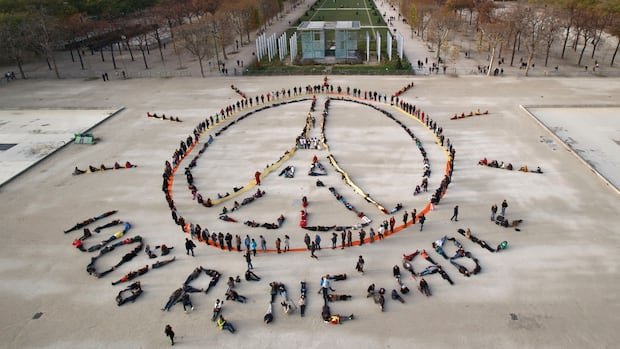

In 2015, the world witnessed a significant milestone as almost 200 nations embraced the Paris Agreement, marking the first-ever global initiative aimed at combatting climate change. The accord set a target to limit global warming to “well below” 2 degrees Celsius compared to pre-industrial levels, with a further aim to restrict it to 1.5 degrees Celsius.
Fast forward a decade, and these same countries are preparing to convene at COP30, the United Nations climate summit in Belem, Brazil, from November 10 to 21. Unfortunately, despite the Paris Agreement, greenhouse gas emissions and global temperatures have continued their upward trajectory, reaching unprecedented levels.
Looking at the state of climate change post-Paris Agreement, it’s evident that the climate has undergone substantial shifts. The average global temperature in December 2015 was 0.97 degrees Celsius higher than pre-industrial times, whereas by December 2024, it had risen to 1.35 degrees Celsius. This indicates a warming of over 0.3 degrees Celsius over the past decade.
According to the recently released 2025 UN Emissions Gap Report, if countries fulfill their climate commitments, the world is projected to experience a 2.3-degree Celsius increase in temperature by 2100. This rise would lead to a doubling of potentially fatal hot days annually on a global scale.
Conversely, back in 2015, the world was on a trajectory towards a 4-degree Celsius temperature rise by 2100. The Paris Agreement played a pivotal role in steering away from this alarming scenario. However, despite this progress, there is still considerable ground to cover to align with the agreement’s objectives.
Moreover, the landscape of clean technologies has undergone substantial changes since 2015. The proliferation of electric vehicles (EVs) and the surge in renewable power generation signify significant strides in the transition towards sustainable energy sources. While EV sales have shown promise, the growth in renewable energy needs to accelerate to meet the Paris targets effectively.
In terms of laws and regulations, the impact of the Paris Agreement on climate action has been tangible. Nations have implemented policies supporting low-carbon technologies and solutions, driving the adoption of cleaner energy practices. However, there is a consensus that more stringent measures and global cooperation are essential to expedite progress in combating climate change.
Financially, investments in green energy have surpassed $2 trillion US, outpacing fossil fuel investments. Additionally, developed countries’ commitment to providing $100 billion US annually to aid developing nations in climate action and adaptation signifies a crucial aspect of the Paris Agreement’s implementation.
In conclusion, while the Paris Agreement has made significant strides in galvanizing global climate action, there is a consensus among experts that more concerted efforts and innovative strategies are imperative to bridge the gap between commitments and tangible outcomes. Adapting global trade rules, making climate actions mandatory, and sector-specific climate progress are among the suggested pathways to fortify the impact of climate agreements moving forward.