

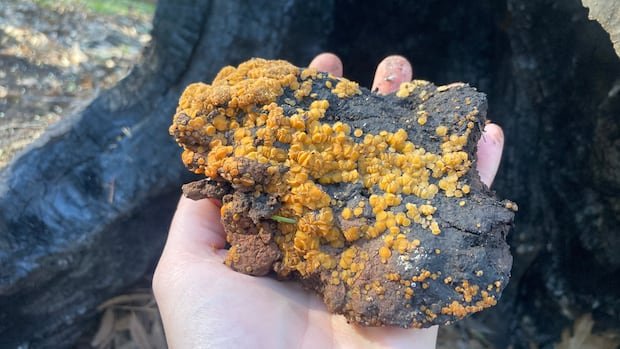

A unique phenomenon occurs after a wildfire, where the forest floor and deadwood become coated with an orange crust, signaling a phase of renewal as tiny fungi begin to thrive amidst the destruction.
These fire-loving fungi, known as pyronema, are nature’s initial responders to wildfires. With climate change leading to larger and more intense wildfires, the study of how these fungi aid in the recovery process has gained significance.
During a wildfire, the extreme heat reaching up to 1,000 degrees Celsius on the surface is insulated by the soil, allowing these fungi to survive. They remain dormant until triggered by the heat, rapidly multiplying and aiding in the post-fire environment’s restoration.
Pyrophilous fungi play a crucial role in post-fire recovery by consuming ash, carbon, and other toxic residues, transforming them into spores and fruiting bodies. These byproducts then serve as nourishment for insects, mites, and bacteria, kickstarting the food web and stabilizing the ecosystem.
Furthermore, erosion risk post-fire is mitigated by the hyphae of fungi, which stabilize the soil and reduce the likelihood of landslides. Research has shown that the recovery of fungal communities post-fire is closely linked to the recovery of plant communities, highlighting the interconnectedness of these organisms.
Considering the potential industrial applications of fungi and their ability to break down pollutants, there is speculation that fire-loving fungi could be harnessed to accelerate forest recovery. While further testing is required, there is evidence suggesting that prescribed burns could enhance the response of these fungi to wildfires, preparing ecosystems for better recovery in the future.