

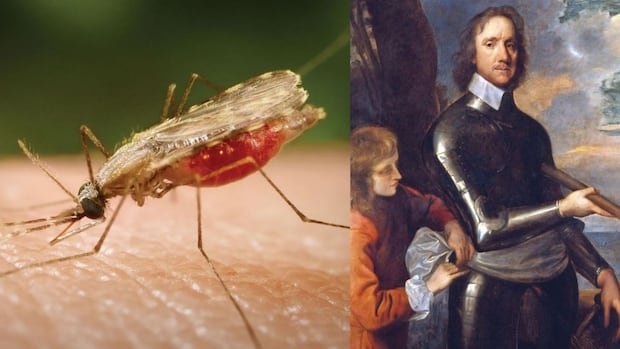

An Irish city councillor in Cork is pushing for the installation of a public statue dedicated to a mosquito. This statue would not just be any mosquito but the one believed by some, particularly in Cork, to have bitten the English invader Oliver Cromwell, causing him to contract “Cork fever,” a historical term for malaria that led to his death.
If approved, this statue would likely become the “smallest public statue in the world,” according to Green Party councillor Oliver Moran. He envisions the diminutive statue positioned on an empty plinth outside Cork City Hall, among other potential locations he is considering.
Moran acknowledges the controversial legacy of Cromwell, a figure with varying perceptions depending on geographical and historical viewpoints. In Ireland, Cromwell is remembered for his brutal military campaigns during the 17th century, resulting in the deaths of hundreds of thousands in the pursuit of English dominance over the country.
Given Cromwell’s unfavorable reputation among the Irish, Moran believes that honoring the mosquito purportedly responsible for his demise could resonate with many people.
In a conversation with As It Happens guest host Nora Young, Moran shared the inspiration behind his unconventional proposal. He explained that the idea originated from a social media discussion about Cromwell’s Irish campaign, where a suggestion was made to commemorate the mosquito that allegedly caused his death. This sparked Moran’s interest in creating a public monument to the insect.
When discussing the contrasting perceptions of Oliver Cromwell, Moran highlighted the stark differences in views depending on one’s location. While Cromwell may be revered as a democratic hero in some circles, the Irish perspective is shaped by the devastating impact of his campaigns, which resulted in the deaths of a significant portion of the population.
Regarding the design of the proposed statue, Moran emphasized that the concept is still in its early stages, with various location options being explored, including the vacant plinth outside Cork City Hall or the historical stone fort in the city center with ties to the Cromwell era.
Addressing potential skepticism about the historical accuracy of the mosquito legend, Moran noted that the focus is more on the symbolic narrative it conveys rather than strict factual evidence. He sees the story as a representation of the downfall of tyrants by seemingly insignificant forces, symbolizing the balance between power and vulnerability.
By advocating for this unconventional public art initiative, Moran aims to underscore the significance of Cork’s natural and historical environment in shaping the city’s identity beyond its human inhabitants.