

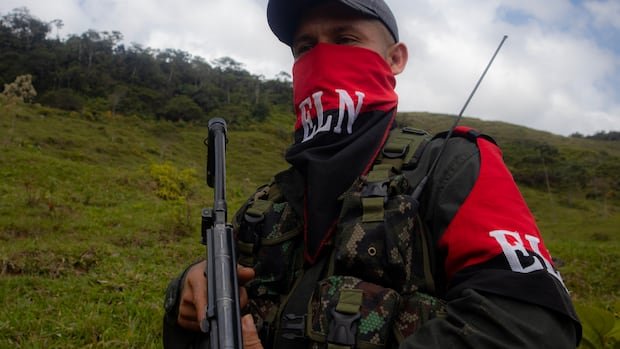

Local security experts have noted a shift in the dynamics of guerrilla groups along the Venezuela-Colombia border following the U.S. attack on Venezuela. Concerns have arisen regarding potential betrayal by Venezuelan officials, prompting the National Liberation Army (ELN) to adjust its security measures and social control systems in Venezuelan communities. The ELN has reportedly closed some camps in Venezuela and suspended training operations, including plans to form a special forces unit with Venezuelan military assistance.
There is uncertainty about the future implications of these developments, with experts highlighting the ELN’s long-standing anticipation of a U.S. intervention in Venezuela. The ELN’s ambitions could be realized if the U.S. military establishes a presence in the country or if Venezuela experiences internal fragmentation.
In response to the situation, Ivan Mordisco, a leader of a splinter group from the Revolutionary Armed Forces of Colombia (FARC), has called for unity among guerrilla groups to combat the perceived common threat posed by the U.S. However, doubts have been raised about Mordisco’s credibility and trustworthiness due to his criminal status and being a target of a substantial bounty by the Colombian government.
The ELN, with an estimated force of 6,000 to 8,000 individuals operating in Colombia and Venezuela, has strongholds in the border regions rich in natural resources. The group’s historical ties with the Venezuelan regime, dating back to the presidency of Hugo Chávez, reflect a shared political ideology and a commitment to defending Venezuela’s Bolivarian Revolution.
Efforts to combat guerrilla groups in the region have been discussed at high levels, with Colombian President Gustavo Petro and U.S. President Donald Trump agreeing to collaborate on addressing the ELN threat. However, voices advocating for a broader approach focusing on community empowerment and human rights emphasize the need for sustainable peace initiatives in Latin America.