

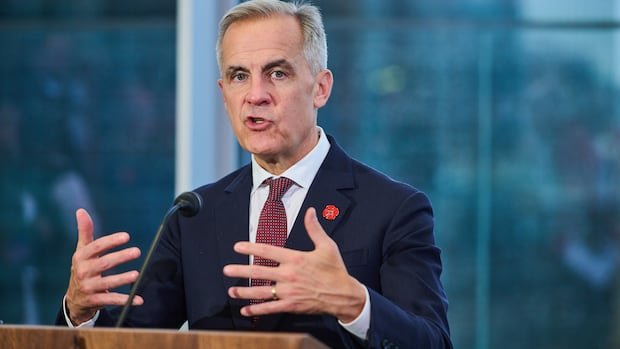

The upcoming week will see the federal government revealing the latest set of major projects that will undergo expedited approvals, announced Prime Minister Mark Carney on Monday. This move comes as Canada endeavors to boost economic activity amidst the ongoing trade dispute with the United States. The unveiling of the project list is scheduled to take place in Prince Rupert, British Columbia, on Thursday.
One of the projects that has already received the green light from Ottawa is the Ksi Lisims liquified natural gas (LNG) initiative, proposed by Indigenous groups near Prince Rupert. Following the approval in September, the project has obtained all required permits for construction to commence.
In a bid to streamline the approvals process, the government previously approved five other projects, including another significant LNG expansion in British Columbia, a small modular reactor project in Ontario, expanded port facilities in Montreal, and new copper mines in the western region. Prime Minister Carney indicated that Thursday’s announcement of projects is not the final list and that the Major Projects Office will continuously update it to drive economic development by reducing bureaucratic obstacles and exempting specific projects from certain regulatory requirements.
Carney’s recent budget allocation includes approximately $214 million over the next five years, with an additional $10 million earmarked for Indigenous consultation tasks to support the approvals work of the new office. The government’s growth strategy places significant emphasis on expediting the construction of energy and resource projects to diversify Canada’s markets beyond the increasingly protectionist U.S. trade policies.
Amidst the challenges posed by the evolving U.S. trade stance, Carney stressed the urgency for swift action to bolster the Canadian economy. He emphasized the importance of prompt decision-making and implementation to secure the nation’s economic future.
Apart from the approved projects, potential contenders for fast-tracked approval include the Toronto-Quebec City high-speed rail project, expanded port facilities in Churchill, Manitoba, development of critical minerals nationwide, and an Alberta-based carbon capture and storage system to reduce emissions in the oil sands, among other initiatives.
Regarding the demand from Alberta Premier Danielle Smith for the approval of a new oil pipeline to the Pacific Coast—a proposal opposed by B.C. officials and some Indigenous groups along the coast—Carney hinted at progress on that front. While addressing the Canadian Club in Toronto, he assured the audience of ongoing efforts on the pipeline issue without divulging specific details.
Conservative Leader Pierre Poilievre expressed skepticism towards Carney’s budget and his commitment to expedite project approvals, criticizing the establishment of a new government department to address regulatory challenges. Poilievre cast doubt on the prospects of advancing major resource projects under Carney’s leadership, particularly highlighting concerns related to building an oil pipeline.