

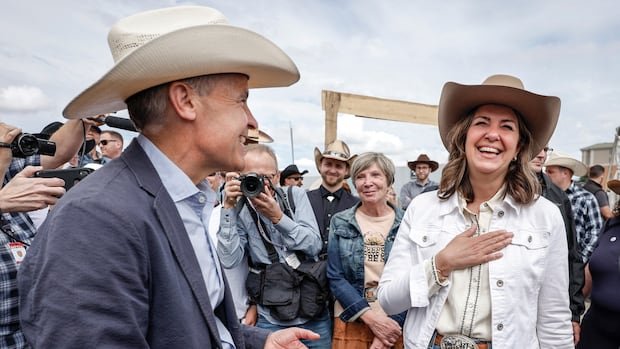

The Alberta and federal governments are currently engaged in discussions to finalize a significant agreement that could potentially reshape their interactions. The primary objective of these negotiations is to establish a formal memorandum of understanding (MOU). The Alberta premier’s office has expressed their intention to finalize the agreement before the Canadian Football League’s Grey Cup on November 16.
The historical relationship between the federal government and the province has been strained for a long time, reaching a particularly contentious stage over the past decade. Alberta’s successive governments have attributed the deteriorating relations to Prime Minister Justin Trudeau’s policies, particularly citing changes to impact assessment legislation, a ban on oil tankers in B.C.’s northern coast, net-zero electricity regulations, and draft regulations for an oil and gas emissions cap.
The ongoing discussions are of critical importance, with ministers and sources refraining from providing extensive comments on the negotiation status, mindful of the potential risks of any missteps in the public domain that could jeopardize the talks. Notably, Alberta Premier Danielle Smith and her environment minister, Rebecca Schulz, have maintained a cautious approach in their responses following the unveiling of the Carney government’s climate strategy in the budget.
The Climate Competitiveness Strategy presented by the Carney government reaffirmed its commitment to certain emissions-reduction policies that have been sources of contention with the Alberta government, such as enhanced methane regulations and clean electricity regulations. While the strategy did not outright commit to scrapping the oil and gas emissions cap, it laid out conditions that, if fulfilled, could render the controversial policy unnecessary.
Smith issued a statement indicating that she would reserve judgment until the conclusion of negotiations with the Carney government in mid-November. The statement emphasized the importance of determining the federal government’s seriousness in repealing or revising policies detrimental to Alberta’s economy over the past decade.
Shannon Joseph, an advocate for natural gas based in Calgary, views the potential agreement in November as a positive step towards a new collaborative era. Joseph highlighted the alignment in objectives between Smith and Prime Minister Mark Carney in promoting investment and positioning Canada as an energy powerhouse.
Despite some optimism, Oliver Anderson, who previously collaborated with the federal environment and climate change minister, remains skeptical about the likelihood of a breakthrough. Anderson believes that Alberta’s conservative government’s opposition to federal clean energy policies may impede genuine progress in the negotiations.
If successful, the negotiations could mark a significant milestone for both levels of government, which have grappled with conflicts in their relationship even before the Trudeau administration. Smith has previously alluded to a “grand bargain” that could potentially be reached following discussions with Carney and other premiers.
[Source](https://www.cbc.ca/news/politics/ottawa-alberta-mou-reset-relationship-oil-and-gas-cap-9.6969996)