

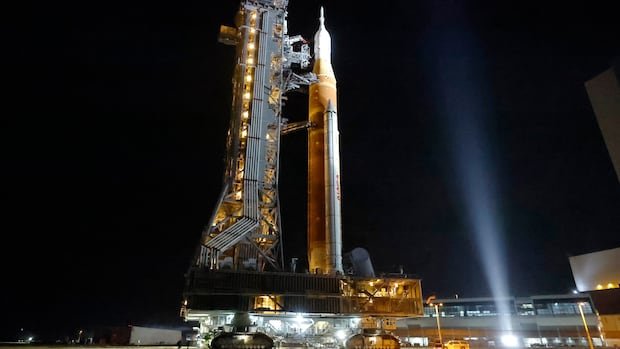

Four astronauts, including Jeremy Hansen from the Canadian Space Agency (CSA), are set for a unique journey around the moon in NASA’s Artemis II lunar mission. The crew, also comprising veteran NASA astronauts Reid Wiseman, Victor Glover, and Christina Koch, will launch from the Kennedy Space Center in Florida following initial delays due to technical issues. Travelling at 28,000 km/h, the astronauts will endure nearly 10 days of non-stop space travel in the Orion capsule.
During this historic mission, the crew will face tight living quarters inside the minivan-sized Orion capsule, which offers about 9.3 cubic meters of space. Despite the compact environment, the astronauts have tailored their sleeping arrangements with hammock-like sleeping bags and will adhere to a strict daily routine for rest and relaxation. The crew will also rely on freeze-dried meals for sustenance, with each member having a personalized 11-day menu.
Hydration and waste management are essential considerations in space travel. The crew will have a limited supply of water stored in the capsule and a rudimentary waste disposal system for bodily functions. Unlike the ISS, where waste is recycled, all waste collected on Orion will be brought back to Earth. To maintain physical health during the journey, the astronauts will utilize a flywheel for exercise routines, combating bone density loss in zero gravity.
In terms of mental well-being, the crew members, who have trained together extensively, are like a close-knit family ready to support each other through the challenges of the mission. The astronauts have also prepared for potential medical needs by testing medications during training. Sleep aids, earplugs, and other comfort items will be available to ensure a smooth journey for the crew on their groundbreaking lunar expedition.