

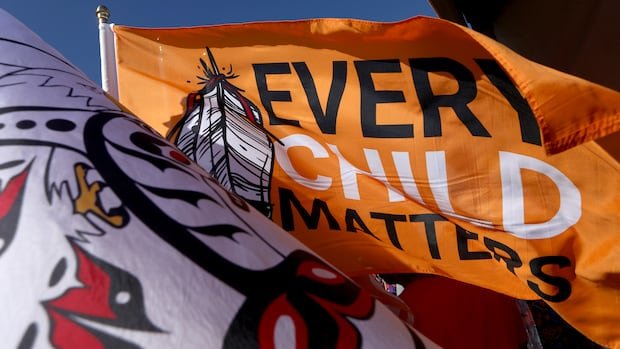

The federal government is engaged in a legal battle with an Anishinaabe First Nation over claims of inadequate funding for on-reserve schools in Ontario. The Mississaugas of the Credit First Nation has brought forward its case to the Canadian Human Rights Tribunal, asserting that Canada’s education funding system is not sufficient, discriminatory, and perpetuates historical injustices suffered by children in residential schools.
Chief Claire Sault emphasized that while the case was initiated by one community, it represents all First Nations children in Ontario who have faced longstanding barriers to education. The tribunal, serving as a platform to address discrimination complaints, conducted the first day of the hearing in person at the Mississaugas of the Credit location, situated 90 kilometers south of Toronto.
The First Nation argues in its legal documents that although residential schools have closed, the impact persists. They criticize Canada’s “interim funding model” introduced in 2019-20, alleging that it falls short of providing comparable funding to the provincial system and neglects the unique needs and higher operational costs of on-reserve schools.
While Canada has yet to present its opening statement in the proceedings, it has acknowledged the enduring effects of colonialism. The Justice Department raised concerns that the First Nation’s complaint lacks specific details on how the funding model fails to meet the students’ needs, describing it as framed in general terms without concrete evidence.
This legal challenge draws on a precedent set in 2016 when the tribunal confirmed Canada’s discriminatory underfunding of child and family services for First Nations children. The case echoes a historic settlement in 2007 that compensated victims and proposed reforms, which were rejected by First Nations leaders in 2024.
Indigenous Services Canada has expressed respect for the First Nation’s decision to pursue the tribunal review, committing to participate in the process respectfully. The Canadian Human Rights Commission has backed the First Nation’s case, asserting that Indigenous children have a fundamental human right to education safeguarded by international and Canadian laws.
The ongoing hearing, conducted virtually, is anticipated to span 15 days to address the complex issues surrounding education funding for Indigenous communities.