

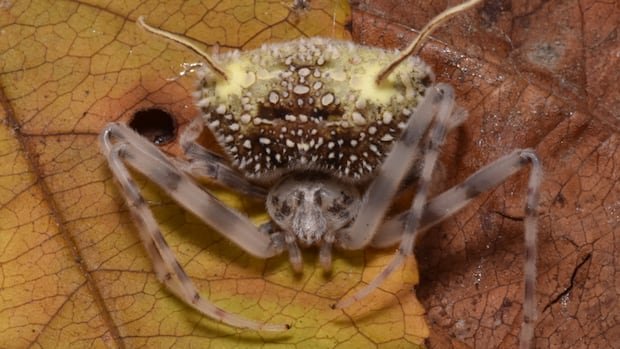

In a surprising turn of events during a group tour in August 2025, scientist Alexander Bentley encountered a spider seemingly covered in a deadly parasitic fungus that was still alive. Bentley, a herpetologist based in Ecuador, who frequently guides tours in the Amazon rainforest, is familiar with cordyceps, a parasitic fungus known for its manipulation of hosts, as depicted in the post-apocalyptic franchise “The Last of Us.”
The spider displayed two tubercle-like structures on its abdomen, typically indicative of a successful cordyceps infection. Initially mistaken for a cordyceps-infected spider, further investigation revealed that it was an entirely new species of arachnid that appeared to mimic fungus like cordyceps, possibly for prey attraction or predator deterrence. The discovery was documented in the scientific journal Zootaxa.
Upon consulting the citizen-science platform iNaturalist, Bentley received feedback suggesting that the spider might be imitating a parasitic fungus called gibellula, linked to the Cordycipitaceae family. Specialist responses debunked the notion of fungal infection, confirming the spider as a potential new species termed Taczanowskia waska.
Collaborating with colleague David Ricardo Díaz-Guevara, Bentley conducted meticulous morphological analyses, leading to the identification of the spider as a new species within the Taczanowskia genus. This groundbreaking finding has been celebrated by the scientific community, showcasing the power of platforms like iNaturalist in facilitating discoveries.
The peculiar resemblance of the spider to fungus raises questions regarding its purpose. It is speculated that the mimicry could serve as either an aggressive hunting tactic or a defense mechanism against predators. Research suggests that the spider’s appearance may not necessarily function as camouflage, with experts emphasizing the need for further investigation to determine the true purpose of its unique features.
Despite uncertainties surrounding the spider’s mimicry, this discovery stands out as one of the most remarkable and rare encounters for Bentley in his rainforest explorations. The unprecedented nature of the finding highlights the significance of ongoing scientific exploration and the invaluable contributions of citizen scientists in unraveling mysteries of the natural world.