

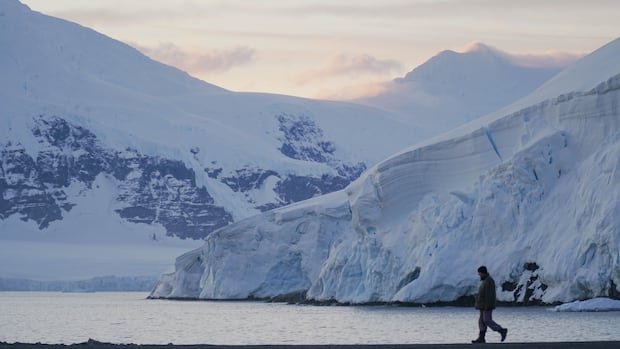

The head of the Royal Canadian Navy, Vice-Admiral Angus Topshee, has revealed ongoing discussions with Chile’s navy about a potential joint Antarctic expedition next spring. The expedition would involve a science team aboard a Chilean vessel for a two-week voyage, focusing on climate change impacts at the poles.
Last February and March, Topshee led the first all-Canadian Antarctic mission with HMCS Margaret Brooke, comprising 15 climate scientists. The team conducted various research activities in the Southern Ocean, including collecting water, air, and sediment samples, mapping the ocean floor, and analyzing snow and air for contaminants.
Expressing enthusiasm for future collaborations, Topshee highlighted the importance of supporting scientific research in critical regions. If finalized, the upcoming expedition would mark another significant milestone in Canada’s Antarctic exploration efforts.
At an ArcticNet event in Calgary, polar scientists welcomed the potential for a shorter mission with Chile, emphasizing the significance of Canada’s growing involvement in Antarctic science. The success of the 2025 Canadian Antarctic Research Expedition (CARE 2025) underlines the country’s dedication to advancing polar research and environmental stewardship.
During the expedition, researchers uncovered early findings, including traces of microplastics in Antarctic samples, raising concerns about environmental contamination. Despite relatively low levels of contaminants, the presence of microplastics in Antarctica underscores the need for continued monitoring and research efforts.
The exploration team, led by Natural Resources Canada scientist Thomas James, aims to build on the success of CARE 2025 by planning for future expeditions. The collaboration between the Canadian navy and scientific community showcases Canada’s commitment to expanding its footprint in Antarctica and contributing valuable insights to global climate change studies.
Researchers are currently analyzing data and samples collected during the expedition, with plans to publish their findings in peer-reviewed journals. The potential return to Antarctica in 2026 signifies a promising era for Canadian Antarctic research, fostering international collaboration and knowledge-sharing in the realm of polar science.
Vice-Admiral Topshee emphasized the geopolitical importance of Antarctic exploration, particularly in light of China’s growing presence in both the Antarctic and the Arctic. By monitoring climate change impacts in these regions, Canada aims to enhance its understanding of environmental shifts and support sustainable practices for Arctic communities.