

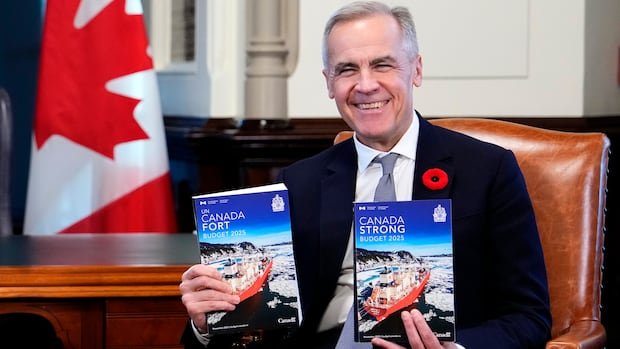

It is a common perception that political parties and their leaders often fail to fulfill their promises. This week’s budget presents an opportunity to assess the implementation of some commitments made by Prime Minister Mark Carney and the Liberal Party during the election campaign earlier this year.
While it is not possible to cover every aspect comprehensively, certain key promises and priorities of Carney’s government can be evaluated.
The Trade Tariff Situation
Following the imposition of tariffs by U.S. President Donald Trump on Canadian steel, aluminum, and vehicles, the Liberal platform vowed to generate $20 billion from retaliatory tariffs this fiscal year. However, the latest budget indicates a revised expectation of $4.4 billion due to the reduction of countermeasures against American goods. The government has collected $3.7 billion in net revenue from tariffs but anticipates a decrease as more Canadian companies seek relief from counter-tariffs.
Significant financial assistance of up to $25 billion over five years has been allocated to support sectors impacted by the tariffs.
NATO Defence Commitments
Under pressure from Trump, the Liberals committed to increasing Canada’s defense spending to two percent of GDP by 2030, a target set by all NATO nations. However, Canada has not met this commitment. Post-election, Carney agreed to further elevate the NATO commitment to five percent of GDP, including 1.5 percent for support infrastructure.
Finance Minister François-Philippe Champagne affirmed in the budget that Canada will achieve the two percent target this year, surpassing the initial timeline. Nevertheless, the budget lacks specific figures to validate the government’s compliance with its obligations, as it does not provide a detailed breakdown of defense spending or GDP comparisons for future years.
Increase in Home Construction
During the campaign, the Liberal Party pledged to double the rate of home construction to 500,000 homes annually by establishing Build Canada Homes and investing $10 billion in affordable housing projects, along with $25 billion in developer loans. The government launched Build Canada Homes in September and allocated $13 billion over five years for its funding, aiming to “nearly” double homebuilding to between 430,000 and 480,000 units yearly.
Investment in Artificial Intelligence
Despite the significant potential of artificial intelligence, the budget falls short of the promised investments. Carney had committed $2.5 billion for digital infrastructure over two fiscal years and $15,000 for AI training in priority sectors. However, the budget only allocates $925 million over five years for public AI infrastructure, including $800 million from the previous year’s budget. The government intends to attract private capital for AI investments, although specific strategies remain unclear.
CBC Funding
While not a specific campaign pledge, the budget unveiled plans to collaborate with CBC/Radio Canada on Eurovision participation. In the election period, the Liberals promised an immediate $150 million boost for the CBC and emphasized the need for enhanced governance and accountability in exchange for sustained funding. The budget includes the pledged $150 million and hints at exploring measures to enhance CBC’s independence.