

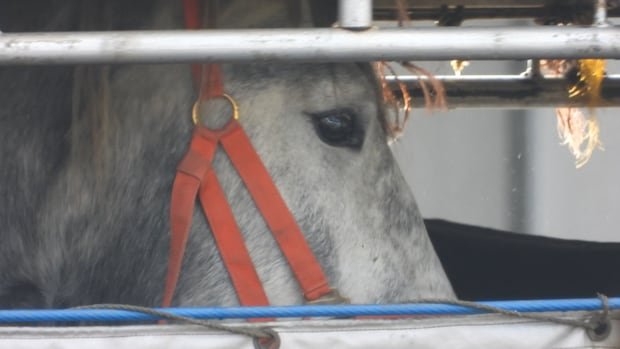

A recent inquiry conducted by animal welfare activists reveals distressing conditions faced by horses flown to Japan for slaughter, highlighting the ongoing need to halt these shipments in Canada. According to Kaitlyn Mitchell, the legal advocacy director at Animal Justice, horses are still succumbing to injuries and fatalities during these flights. Mitchell, along with the Japan-based Life Investigation Agency (LIA) and the Canadian Horse Defence Coalition (CHDC), collaborated on the report based on information provided by the mentioned organizations.
Retired Conservative senator Donald Plett opposes the idea of banning these shipments but suggests that Ottawa should enforce stricter reporting standards and accountability measures for cases where horses are harmed or perish during transport. In 2023, Statistics Canada reported that 2,512 horses were exported to Japan for slaughter, amounting to a total value of $19 million. The industry involves about five export firms and numerous producers, primarily in Alberta, with some also in Manitoba and Ontario.
In Japan, horsemeat, commonly known as basashi or sakura niku, is served as a delicacy in raw form. Animal Justice and LIA analyzed Government of Japan records from 18 shipments carrying an estimated 1,822 horses from Edmonton and Winnipeg between September 2024 and September 2025. These records were cross-referenced with Canadian Food Inspection Agency (CFIA) documents obtained by CHDC through access to information requests. The investigation revealed that at least nine horses died due to illness or injury during transportation, while nearly 300 others suffered various ailments such as lacerations, infections, and collapsed conditions.
Despite these findings, CFIA records did not reflect the extent of the issues faced by the horses during transport. Notably, a specific shipment in November 2024 from Edmonton resulted in the death of three horses, with several others experiencing transport-related complications. Mitchell also highlighted a December 16, 2024, shipment from Winnipeg, which attracted attention due to proposed legislation to ban live horse exports for slaughter.
The ongoing concerns regarding the welfare of horses during transport have sparked calls for more stringent oversight and regulatory changes. While some improvements have been made, Mitchell believes that the industry’s inherent issues may render it unresolvable. Efforts to ban live horse exports have been ongoing, with Animal Justice advocating for amendments to the Health of Animals Act to prohibit such exports. Despite these efforts, the debate continues between those advocating for a ban and those emphasizing the economic importance of the livestock industry.