

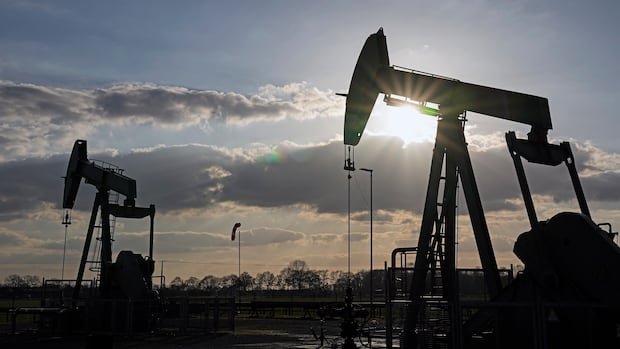

Most U.S. stocks experienced declines on Wednesday amidst a rebound in oil prices, although markets exhibited relative stability for a second consecutive day following a volatile start to the week due to ongoing conflicts in the Middle East. The S&P 500 closed down by 0.1%, the Dow Jones Industrial Average decreased by 0.6%, and the Nasdaq composite saw a slight uptick of 0.1%. Wall Street received a boost from Oracle’s strong profit report, which helped mitigate overall losses.
The escalation of the war in the Middle East, which began on February 28, has significantly influenced financial markets globally, leading to frequent fluctuations driven by oil price movements. Oil prices surged to their highest levels since 2022 earlier this week amid concerns of prolonged disruptions in Middle Eastern production, sparking fears of heightened inflationary pressures on the global economy.
Despite efforts by the International Energy Agency (IEA) to address the situation by announcing a record release of 400 million barrels of oil from emergency stockpiles, oil prices continued to climb on Wednesday. Analysts suggest that while these releases may temporarily alleviate market tensions, a full restoration of oil and gas flows from the Persian Gulf region is essential to stabilize the market, with investors eagerly awaiting the end of the conflict.
Germany, Austria, and Japan responded to the IEA’s call by agreeing to release portions of their oil reserves. The strategic importance of the Strait of Hormuz, through which a significant portion of the world’s oil passes daily, has been underscored by the conflict, prompting concerns about supply disruptions and storage capacity constraints in the region.
The ongoing threats to maritime traffic in the Strait of Hormuz have raised uncertainties about the flow of crude oil, prompting discussions on alternative routes to ensure stability in oil prices. Analysts warn that while emergency reserve releases may offer temporary relief, sustained supply disruptions could lead to further price hikes if the conflict persists.
The potential for prolonged high oil prices poses risks to household budgets and corporate expenses, potentially resulting in a scenario of “stagflation,” characterized by stagnant economic growth and persistent inflation. Recent data indicated a 2.4% year-over-year increase in consumer prices, reflecting rising costs of essential goods and services, further exacerbated by the spike in gasoline prices due to geopolitical tensions.
Market speculations on the timing of potential interest rate cuts by the U.S. Federal Reserve have been impacted by the surge in oil prices, with forecasts being pushed back. President Trump’s advocacy for rate cuts to stimulate economic growth has been met with caution, as such measures could exacerbate inflationary pressures.