

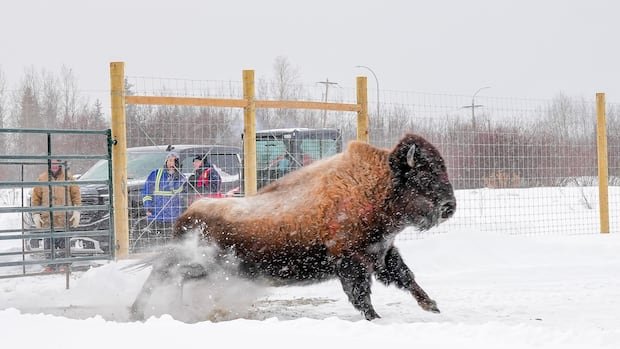

A medley of sounds echoed through a harsh blizzard at a Métis-run ranch in the northeastern part of Alberta as the hooves of 20 wood bison clashed against metal and snow. In a controlled manner, the shaggy-haired bison leaped out of a metal shipping container one by one and entered a fenced area within the boreal forest. As the herd vanished into the swirling snow, there were embraces, cheers, and celebratory gestures. This marked the first bison stampede on the Willow Lake Métis Nation in approximately 120 years.
Around 30 elders and leaders from the community warmly welcomed the herd, which had been relocated from Elk Island National Park. The bison now reside on a ranch managed by the Métis community near the village of Anzac, situated about 50 kilometers southeast of Fort McMurray. Robert Cree, an elder from the nearby Fort McMurray 468 First Nation, expressed his joy at witnessing the event, mentioning the historical presence of buffaloes in the area as recounted by his grandfather. He emphasized the significance of the bison returning to their traditional lands.
The inauguration of the ranch is considered a significant milestone for both the Indigenous community and the animals by Métis leaders. Kyle Whitford, an Indigenous guardian employed as a trapper for Willow Lake Métis Nation, views the herd as a triumph for food sustainability. He expressed his excitement and relief that the bison are now back in their home, which was constructed with care and affection.
As part of Willow Lake’s $50-million multi-year food sustainability initiative, the bison will inhabit 16 hectares of the 82-hectare ranch. Future plans include incorporating hens, honey bees, greenhouses, hydroponics, and community gardens. Matthew Michetti, responsible for government and industry relations at Willow Lake, highlighted the venture’s significance in kickstarting agriculture and tourism businesses, as well as contributing to sovereignty by enabling influence over the environment.
Long-term strategies involve cultural and tourism initiatives such as an Indigenous medicine walk, collaborations with educational institutions, and the establishment of a visitors’ center. Stella Lavallee, president of Willow Lake Métis Nation, expressed enthusiasm for involving elders in the bison harvest to provide immediate sustenance for Métis families and transfer essential knowledge to younger generations. Feather Bourque-Jenner, the director at Willow Lake, emphasized how the project will help alleviate food and living expenses in the northern region by reintroducing a sustainable lifestyle into daily routines.
Nathaniel Ostashewski, the proprietor of Cyrus Bison in Bonnyville, Alberta, located over 400 kilometers south, is advising Willow Lake on ranching practices and foresees the herd’s continuous growth. He highlighted the favorable conditions in the area, such as the lush humidity of nearby Gregoire Lake and extended northern summer sunlight, which promote plant growth. The bison’s presence is expected to rejuvenate the muskeg, transforming it into a vibrant prairie by aerating the soil with their sharp hooves and reintroducing moisture and nutrients. Ostashewski emphasized that a thriving bison population in Alberta would be beneficial for all stakeholders.
Finally, the return of 20 bison to the Willow Lake Métis Nation marks a significant step towards food sovereignty for the community, as reported by CBC’s Jamie Malbeuf. This initiative signifies a resurgence of Indigenous culture and identity through the revitalization of bison populations in the region.