

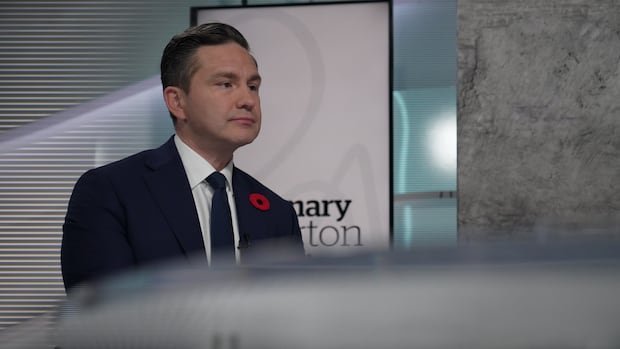

Conservative Leader Pierre Poilievre has expressed his intention to utilize the notwithstanding clause if elected to reverse the recent Supreme Court ruling that invalidated mandatory minimums for accessing or possessing child pornography. The Supreme Court’s decision on Friday, which deemed the one-year prison sentences unconstitutional and resulted in a 5-4 split among the judges, has faced criticism from various provincial and federal leaders.
In an interview with CBC News, Poilievre strongly criticized the ruling, stating that he would oppose it and invoke the notwithstanding clause to overturn it if he were in power. He emphasized his commitment to introducing mandatory prison sentences for possession of child pornography to ensure severe consequences for offenders.
The notwithstanding clause, found in Section 33 of the Charter, allows for provincial or federal legislation to supersede certain Charter rights for a limited period. Poilievre’s stance aligns with his resolve to address the issue of child pornography within a legal framework that he deems more stringent.
The timing of the next federal election remains uncertain, with recent elections in April resulting in Prime Minister Mark Carney’s Liberals forming a minority government. The Supreme Court ruling stemmed from an appeal from Quebec involving two cases of child pornography offenses, where the defendants challenged the mandatory minimum sentences as unconstitutional.
The dissenting voices, represented by Justices Richard Wagner and Suzanne Côté, disagreed with the majority ruling and emphasized the importance of severe sentences for offenders of sexual crimes against minors. Other Conservative figures, including Ontario Premier Doug Ford, Alberta Premier Danielle Smith, and Saskatchewan Premier Scott Moe, have also condemned the decision and called for the notwithstanding clause to be invoked.
The use of the notwithstanding clause at the federal level is unprecedented, although some provinces, such as Saskatchewan, Quebec, and Ontario, have utilized it in the past. The Attorney General’s office, led by Sean Fraser, is carefully reviewing the implications of the ruling, emphasizing the severity of crimes against children and the need for strong legal consequences for offenders.
The Supreme Court’s ruling on mandatory minimums for child pornography offenses is part of a larger trend where such sentences have been challenged and struck down. The decision has been received with mixed reactions, with advocacy groups acknowledging the complexities surrounding mandatory minimums and their impact on justice.