

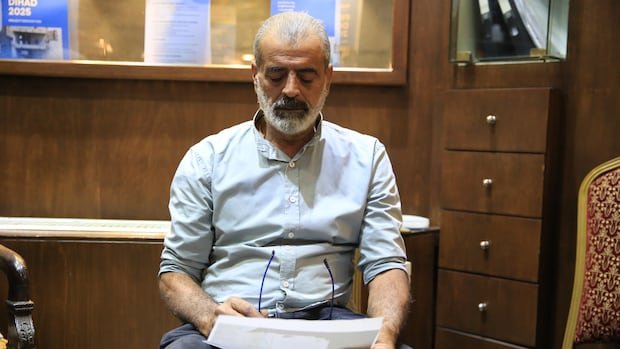

Thaer al-Najjar and his family had been searching for his brother Imad for 13 years since his violent arrest by Syria’s former Assad regime in 2012. Despite numerous trips to a notorious prison outside Damascus after Assad’s government was overthrown in December 2024, they found no trace of Imad. However, a reporter handed Najjar a paper confirming his worst fears: a leaked death certificate from the Assad regime, stating that Imad had not survived after his arrest during peaceful protests in 2012.
The Damascus dossier, a compilation of 134,000 Syrian security and intelligence records obtained by German broadcaster NDR, revealed the atrocities committed by Assad’s forces, including 70,000 gruesome images of torture victims. The leaked files shed light on the regime’s systematic torture and execution of over 10,000 detainees. René Provost, a law professor at McGill University, described the dossier as a “true bureaucracy of torture and execution” orchestrated by the top echelons of the Syrian regime.
The photos in the dossier, compiled by a former Syrian military police officer, provide crucial evidence for potential criminal investigations and prosecutions against Assad regime officials. The images, meticulously cataloged and titled, showcase the brutality inflicted on prisoners, with many showing signs of starvation and physical abuse. This evidence has been shared with international bodies to aid in locating missing persons and seeking justice for the victims.
The dossier includes accounts of prominent activists like Mazen al-Hamada, whose body was discovered post-Assad’s regime collapse, providing closure for families who had long sought answers about their missing loved ones. The revelations have brought to light the harrowing realities faced by detainees under the Assad regime and underscore the urgent need for accountability and justice for the victims.