

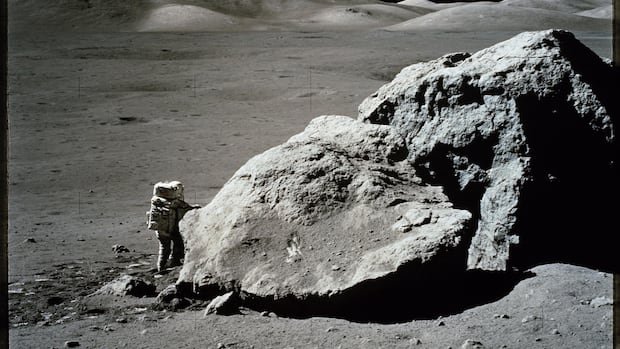

On July 20, 1969, the world anxiously watched as two American astronauts, namely Neil Armstrong and Buzz Aldrin, smoothly traversed the moon’s surface while Michael Collins, the command module pilot, observed from above. This event was expected to mark the dawn of a new space age, with humans breaking free from the confines of Earth and venturing into space.
Despite undergoing six additional missions, including the infamous Apollo 13 incident that hindered a lunar landing, humanity’s aspirations of exploring the moon came to a halt after Apollo 17 in December 1972. Various reasons have been proposed for this cessation, ranging from the costly Vietnam War to achieving the initial goal of outpacing the former Soviet Union in landing on the moon, to declining public interest.
Now, after 53 years since humans last approached the moon, NASA’s ambitious Artemis program aims to reintroduce humans to the lunar surface within the upcoming years. The program’s objective is not only to conduct scientific research but also to advance engineering development by tackling unprecedented challenges.
The initial human lunar test is scheduled for Artemis II, set to launch early February, featuring astronauts from NASA and the Canadian Space Agency. Though they won’t land on the moon, this 10-day mission will orbit the moon, allowing the crew to venture farther than any human before, testing essential equipment and conducting experiments crucial for the subsequent Artemis III mission in 2028.
Apart from the Artemis program involving 61 countries, other nations like China and India are also striving to send humans to the moon by 2030 and 2040, respectively. The moon has become a coveted destination, attracting more than a dozen private entities investing in its potential as a sustainable venture.
While some may view moon exploration as a costly pursuit, space agencies and private companies perceive it as a strategic investment. The involvement of private enterprises emphasizes profit-driven motives, foreseeing resource exploitation on the moon, which requires long-term commitment and technological advancements.
The scientific discoveries and technological innovations from lunar missions have not only enhanced space exploration but also benefitted everyday life on Earth. For instance, developments in computer technology, food safety protocols, and medical advancements can be traced back to space missions like Apollo. Moreover, technology derived from space endeavors has been repurposed for various applications, such as hospital surgeries.
The latest wave of lunar exploration is characterized by governments supporting commercial enterprises engaged in lunar activities. These ventures range from developing novel technologies like nuclear reactors for lunar utilization to lunar mining operations targeting resources like water and helium-3 for clean energy solutions. The burgeoning space economy is creating job opportunities and driving significant investments, showcasing the potential for sustained growth and innovation in the space sector.
As humanity embarks on this new chapter of lunar exploration, the long-term implications remain uncertain. Nevertheless, experts like Ram Jakhu express optimism about the transformative impact of space exploration on humanity, anticipating groundbreaking advancements driven by space utilization and artificial intelligence. The future of lunar exploration holds the promise of reshaping human endeavors and capabilities on an unprecedented scale.