

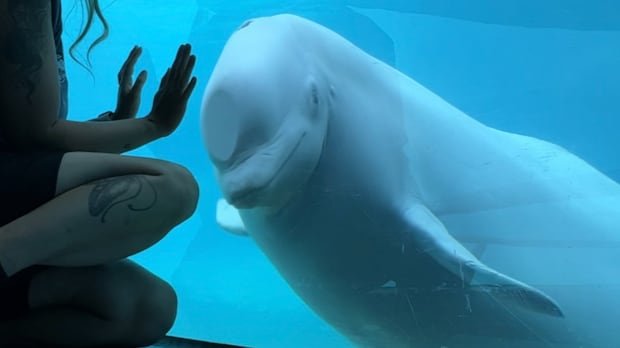

Canadian Fisheries Minister Joanne Thompson has expressed confidence in Marineland’s proposal to transfer 34 marine mammals to U.S. aquariums, indicating a growing likelihood of relocating belugas and dolphins from the closed Niagara Falls amusement park in Ontario. However, the recent news of Ottawa granting conditional approval for the animals’ relocation has raised concerns among animal advocates, who fear potential breeding and performance exploitation in their new environments.
The relocation plan involves sending 30 belugas and four dolphins to “accredited” facilities known for high animal welfare standards, as stated by Thompson in an interview with CBC News. The potential receiving aquariums include Shedd Aquarium in Chicago, Georgia Aquarium in Atlanta, Mystic Aquarium in Connecticut, and a SeaWorld location, all recognized by Accredited Zoos and Aquariums (AZA).
Thompson outlined two conditions that Marineland must fulfill for export approval: assessment of the animals’ health by accredited veterinarians and a comprehensive transportation plan. She emphasized the importance of ensuring health support at the new facilities to provide improved living conditions for the belugas and dolphins.
Since 2019, twenty Marineland whales, including one orca and 19 belugas, have reportedly passed away, leading to the park’s closure in late 2024 amid ongoing controversies regarding animal welfare and performances. A federal law enacted in 2019 prohibits breeding or entertainment use of whales, dolphins, and porpoises, requiring a special permit for their export, which the fisheries minister can grant for scientific research purposes or if captivity elsewhere is deemed beneficial.
As discussions continue on potential export permits for Marineland, advocates like Camille Labchuk from Animal Justice stress the importance of ensuring that the marine mammals are not exploited for performances or breeding in their new homes. While there were hopes for the belugas to be transferred to a proposed sanctuary in Nova Scotia, uncertainties around construction and funding persist.
Regarding the possibility of performances or breeding in the U.S., Thompson did not directly address the question. A government source later clarified that the animals would be subject to U.S. state laws upon transfer, with decisions on their care based on each facility’s capacity and animal welfare considerations. SeaWorld, known for offering in-water interactions and dolphin shows, operates multiple locations across the U.S.
Former Marineland trainer Kristy Burgess expressed support for the relocation plan, emphasizing the superior facilities in the U.S. and trusting in the minister’s oversight to safeguard the marine mammals. Burgess highlighted the urgency of the situation, with Marineland previously threatening to euthanize the whales if relocation efforts were not approved by a specified deadline.
In conclusion, the potential transfer to U.S. aquariums represents hope for the animals, with stakeholders emphasizing the importance of prioritizing their well-being and preventing exploitation in their new environments.