

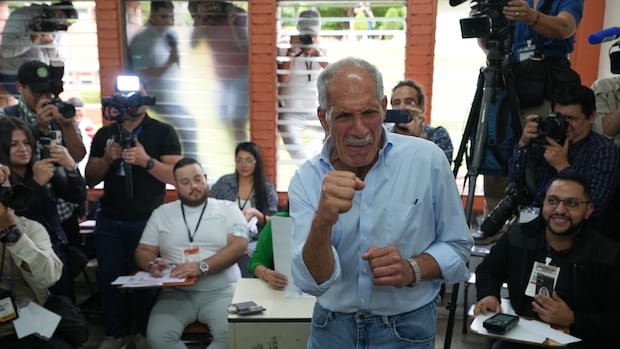

Two right-leaning contenders were neck and neck in the race for the presidency of Honduras, with approximately 55% of voting locations reporting early Monday, according to initial and incomplete results. The election took place shortly after U.S. President Donald Trump inserted himself into a tight race by backing one of the candidates and declaring his intention to pardon a former president.
The National Electoral Council reported that Nasry (Tito) Asfura of the National Party held around 40% of the vote in the early tally, while Salvador Nasralla of the conservative Liberal Party trailed closely with about 39.78%. Rixi Moncada of the democratic socialist LIBRE party was behind with 19.49%.
Both Asfura and Nasralla refrained from claiming victory, emphasizing that it was still early in the counting process. Despite initial excitement at their respective campaign headquarters, the atmosphere in the streets of the capital, Tegucigalpa, remained calm as the vote count progressed slowly.
Asfura, a 67-year-old former mayor of Tegucigalpa who received Trump’s endorsement, presented himself as a practical leader, highlighting his successful infrastructure initiatives. On the other hand, Nasralla, a 72-year-old sports commentator, has collaborated with various political groups over the years and previously ran for the presidency alongside current President Xiomara Castro.
Following the release of preliminary results late Sunday, Nasralla acknowledged the tight race and expressed optimism that the remaining votes would work in his favor. He sought to leverage Trump’s involvement to reinforce his outsider image, despite this being his fourth presidential bid.
Trump’s endorsement of Asfura on Friday was accompanied by statements indicating his preference for countering drug trafficking alongside Asfura. Additionally, Trump’s announcement of a pardon for former President Juan Orlando Hernández, who was serving a 45-year sentence in a U.S. prison for involvement in drug trafficking, sparked controversy.
Democrats in Washington criticized Trump’s decision to pardon Hernández, highlighting the severity of the charges against him. The move raised concerns as it conflicted with the U.S.’s anti-narcotics efforts in the region.
As the election results unfolded, concerns arose regarding the acceptance of the outcome, with accusations of election tampering exchanged among the leading candidates. Both local and international observers cautioned that these allegations could undermine the legitimacy of the election results.
Amidst these uncertainties, many Honduran voters focused on security and employment issues, with the country grappling with high homicide and unemployment rates. Despite some improvements during Castro’s tenure, challenges persist, including Honduras holding the highest homicide rate in Central America.
As the election outcome remained uncertain, citizens expressed a desire for their voices to be heard and respected, emphasizing the importance of upholding the democratic process in Honduras.