

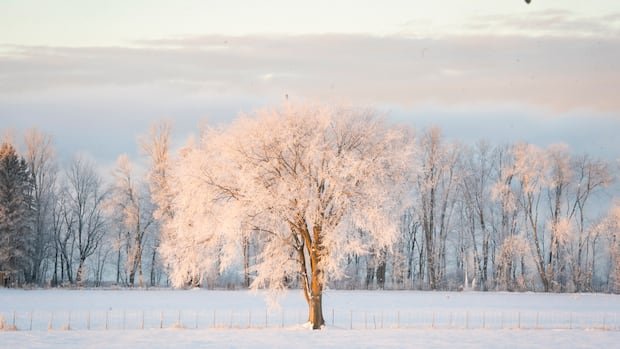

The year 2026 has just begun, and amidst the ongoing events, the sudden emergence of freezing temperatures in Canada and the northern United States has become a significant concern. Sub-zero temperatures below -20 degrees Celsius, and as low as -40 degrees Celsius with wind chill in certain areas, are expected to persist across these regions in the days ahead.
A social media post recently circulated, suggesting that the extreme cold in states like North Dakota, South Dakota, and Michigan could lead to trees exploding. However, officials have clarified that while the cold poses risks to residents and may contribute to a widespread and potentially hazardous winter storm spanning nearly 30 states, the notion of trees bursting is unsubstantiated.
In cold conditions, the phenomenon of frost cracks can occur in trees, primarily affecting thin-barked varieties. These vertical splits in the trunk can produce loud sounds resembling explosions due to the rapid freezing of water and sap within the tree. This process leads to a physical pressure build-up, causing the tree to split and branches to break off.
Although frost cracks do not harm the tree and typically heal during warmer weather, repeated occurrences can result in lasting scars or “frost ribs” on the trunk. Certain tree species, such as elm, poplar, maple, oak, ash, and fruit-bearing trees like apple and cherry, are more susceptible to frost cracks, especially in hardwood trees that shed their leaves in winter.
Beyond trees, extreme cold can trigger other phenomena like thundersnow and frost quakes. Frost quakes, also known as cryoseism, occur when underground water freezes rapidly, causing pressure that leads to ground cracks and loud noises. Thundersnow, on the other hand, is a rare winter weather event where thunder and lightning occur during a snowstorm, creating a unique and dramatic winter experience.
In conclusion, while the freezing temperatures pose challenges and potential risks, the likelihood of trees exploding due to the cold is minimal. It is crucial for residents in affected regions to stay informed and take necessary precautions to stay safe during this period of intense cold.