

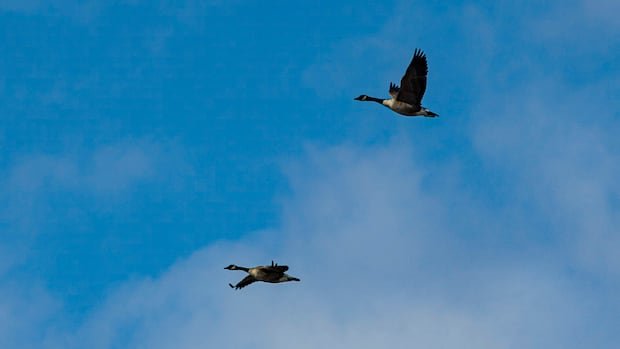

The Canadian Food Inspection Agency has identified a highly transmissible form of avian influenza in multiple samples gathered in southern Manitoba, following an extraordinary mass bird mortality event. Approximately 500 bird carcasses, predominantly Canada geese, were discovered near waterways in southern Manitoba in early December. While clusters of deceased birds were also found near the Red River north of Winnipeg’s Perimeter Highway, the largest concentration was observed in a group of ponds in Niverville.
Frank Baldwin, a biologist at the Canadian Wildlife Service, informed CBC News that samples from the birds were forwarded to the Canadian Food Inspection Agency after testing positive for avian influenza, commonly known as bird flu, to ascertain the specific strain of the infection. A total of 39 wild bird samples were sent for testing on December 11, with 38 confirmed to be infected with the highly pathogenic H5N1 strain of bird flu.
Hannah Wallace, a researcher at the University of Manitoba specializing in viral immunology, expressed relief that the samples tested positive for the known H5N1 strain. Despite the severe impact of H5N1 on birds, Wallace was concerned about potential mutations that could render the virus more hazardous to both birds and humans. She highlighted the possibility of a hybrid avian-human virus with increased risks for human health.
The detected H5N1 strain is prevalent among domestic poultry and wild bird populations in North America, according to the food inspection agency. Wallace emphasized that this finding was not unexpected, as H5N1 had been previously detected in Canada. Factors such as weakened or undernourished birds potentially being more susceptible to H5N1 were considered in the context of the recent bird fatalities in southern Manitoba.
Studies have shown that avian influenza can persist in the environment even after birds have migrated. While Wallace believed it was unlikely that the virus remained at the specific site where the dead birds were found, she cautioned that it could still be present in ponds or river sediments, surviving through the winter months until spring. Baldwin noted the variable behavior of avian influenza annually, with the possibility of increased mortality among migratory snow geese and Ross’s geese in the coming months.
Poultry farmers in Manitoba have long been concerned about avian influenza due to its highly contagious and lethal nature. Rod Wiebe, the board chair of Manitoba Chicken Producers, highlighted the challenges posed by wild birds in transmitting the virus to poultry farms. Candace Lylyk, owner of Breezy Birds Farm, shared her efforts to protect her poultry from wild birds and maintain biosecurity measures to prevent the spread of avian influenza on her farm.
The impact of H5N1 avian influenza on both wildlife and poultry industries underscores the ongoing vigilance required to monitor and prevent the spread of the virus.