

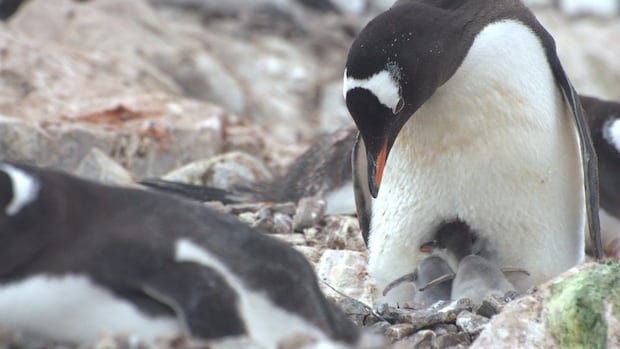

A recent study spanning over a decade has revealed that penguins in Antarctica are swiftly altering their breeding behaviors in response to escalating temperatures driven by climate change. The research, focusing on three penguin species, indicates varying adaptation speeds among the species, influenced by their individual characteristics and susceptibilities.
Lead researcher Ignacio Martinez from the University of Oxford highlighted the potential emergence of “winners and losers of climate change” within the penguin species. The study concentrated on Gentoo, Adélie, and chinstrap penguins. Among these, Gentoo penguins, known for their versatility in diet and ability to inhabit nesting areas year-round, exhibited the most rapid adjustment in their breeding season, shifting by an average of 13 days.
The study, utilizing a network of 77 time-lapse cameras across Antarctica to monitor the penguins, observed changes in breeding cycles for all three species. While Gentoos demonstrated a significant shift, Adélie and chinstrap penguins, reliant on krill and undertaking extensive migrations, experienced a 10-day alteration in breeding seasons on average.
The study also emphasized the potential implications of these adaptations on future penguin populations. Though some species like Gentoos may be thriving by establishing new colonies and expanding their numbers while others decline, the overall outlook for penguins remains concerning. The possibility of species conflict over resources and territory looms, raising questions about the sustainability of penguin populations in the face of ongoing climate change.
Beyond penguins, global wildlife is also responding to climate change by adjusting breeding and migration patterns. Recent research involving 75 bird, mammal, and reptile species worldwide indicates a trend of earlier timing in reproductive activities, especially pronounced in species inhabiting polar regions.
While the study did not explicitly analyze the direct impact of altered breeding seasons on penguin populations, researchers plan to delve deeper into this aspect in future investigations. The findings underscore the urgent need for conservation efforts to safeguard the diverse penguin species in Antarctica amid rapidly changing environmental conditions.