

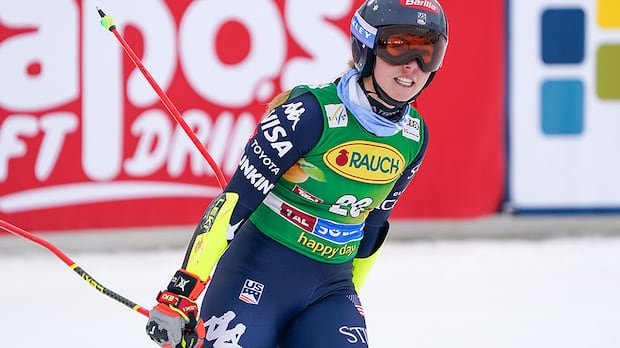

When Paula Moltzan kicked off the alpine skiing World Cup season with her best performance in giant slalom, she pondered whether she was hitting her peak too early with the 2026 Milan-Cortina Olympics still several months away. Moltzan expressed her hope of establishing a solid foundation to progress from rather than peaking prematurely. While the World Cup season spans five months and is crucial for skiers, the opportunity to contend for Olympic glory arises only once every four years.
Moltzan, the runner-up to Julia Scheib in the giant slalom event, acknowledged the concept of peaking in skiing. Her coaches meticulously monitor her recovery status and peaking cycle based on skiing days, turns taken, and physical load to ensure she reaches optimal performance levels for the Olympics. Moltzan, a bronze medalist in giant slalom at the 2025 world championships eyeing her second Winter Olympics, emphasized the importance of strategic planning.
Two-time Olympic champion Mikaela Shiffrin adopts a distinct strategy, emphasizing the challenge of pinpointing a peak moment in ski racing. Shiffrin prioritizes maintaining high racing levels throughout the season while strategically managing training intensity, time allocation, and energy expenditure to sustain performance. Similarly, opinions diverge on whether skiers should tailor their entire World Cup season around the Olympics, considering the unpredictability of factors influencing performance.
Austrian speed specialist Vincent Kriechmayr stresses the importance of timing peak form before the Olympics, highlighting key races like the downhills in Wengen and Kitzbuhel in mid-January. Roland Assinger, the head coach of the Austria women’s team, acknowledges the uncertainty in predicting performance at major events due to unforeseen variables, noting the tendency for surprise winners to emerge at Olympics and world championships.
Italian downhill gold medalist Sofia Goggia and Swiss standout Lara Gut-Behrami approach the upcoming season like any other, emphasizing the need to focus on each race to maintain peak fitness in February. Former overall World Cup champion Alexis Pinturault believes success can be planned, especially when competing in a single discipline like giant slalom. Henrik Kristoffersen, a Norwegian tech specialist with Olympic medals, stresses the importance of winning races to enter a competitive rhythm and flow.
Each skier’s approach to peaking for the Olympics varies, with factors like race schedules, training intensity, and individual goals shaping their strategies for optimal performance at the prestigious event.