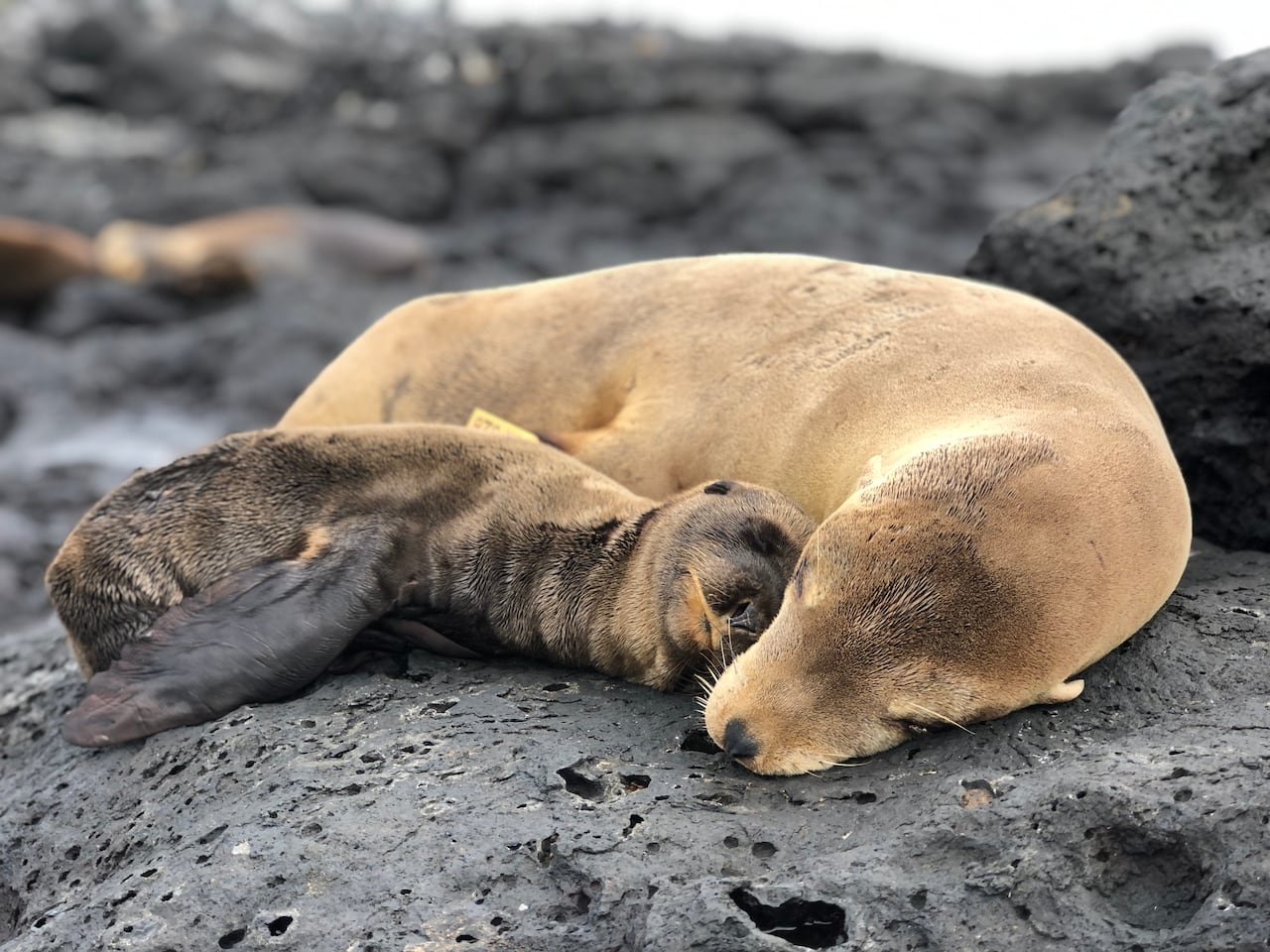

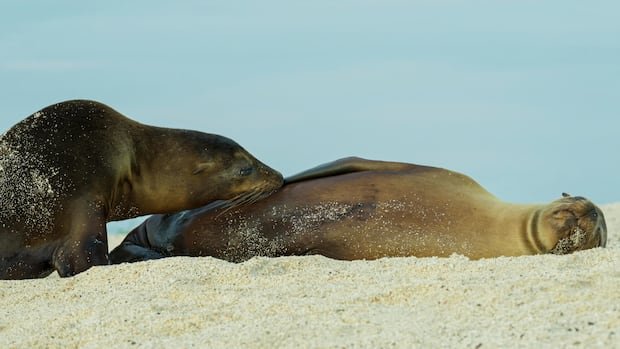


Alexandra Childs was always taken aback by the sight of fully grown Galápagos Islands sea lions happily nursing from their mothers.
“It was always surprising,” shared Childs, a PhD candidate specializing in behavioral and marine biology at the University of Bielefeld in Germany, in a conversation with Nil Köksal from As It Happens.
“You would question yourself each time you witnessed it,” she added. “You’d go back to the data, thinking, ‘I need to reconfirm the age. Am I certain this is happening?’ It was mind-boggling.”
Childs led a recent study that unveiled the existence of around 11% of adult sea lions in the Galápagos engaging in prolonged nursing from their mothers, a phenomenon termed “supersuckling.” This research was published in the journal the American Naturalist.
The investigation scrutinized two decades of data from a group of Galápagos sea lions, scientifically known as Zalophus wollebaeki.
According to Childs, sea lions typically wean off their mothers between 1.5 and 4.5 years of age before reaching sexual maturity, which aligns with expectations. However, the supersucklers defy this norm by persisting beyond this developmental stage.
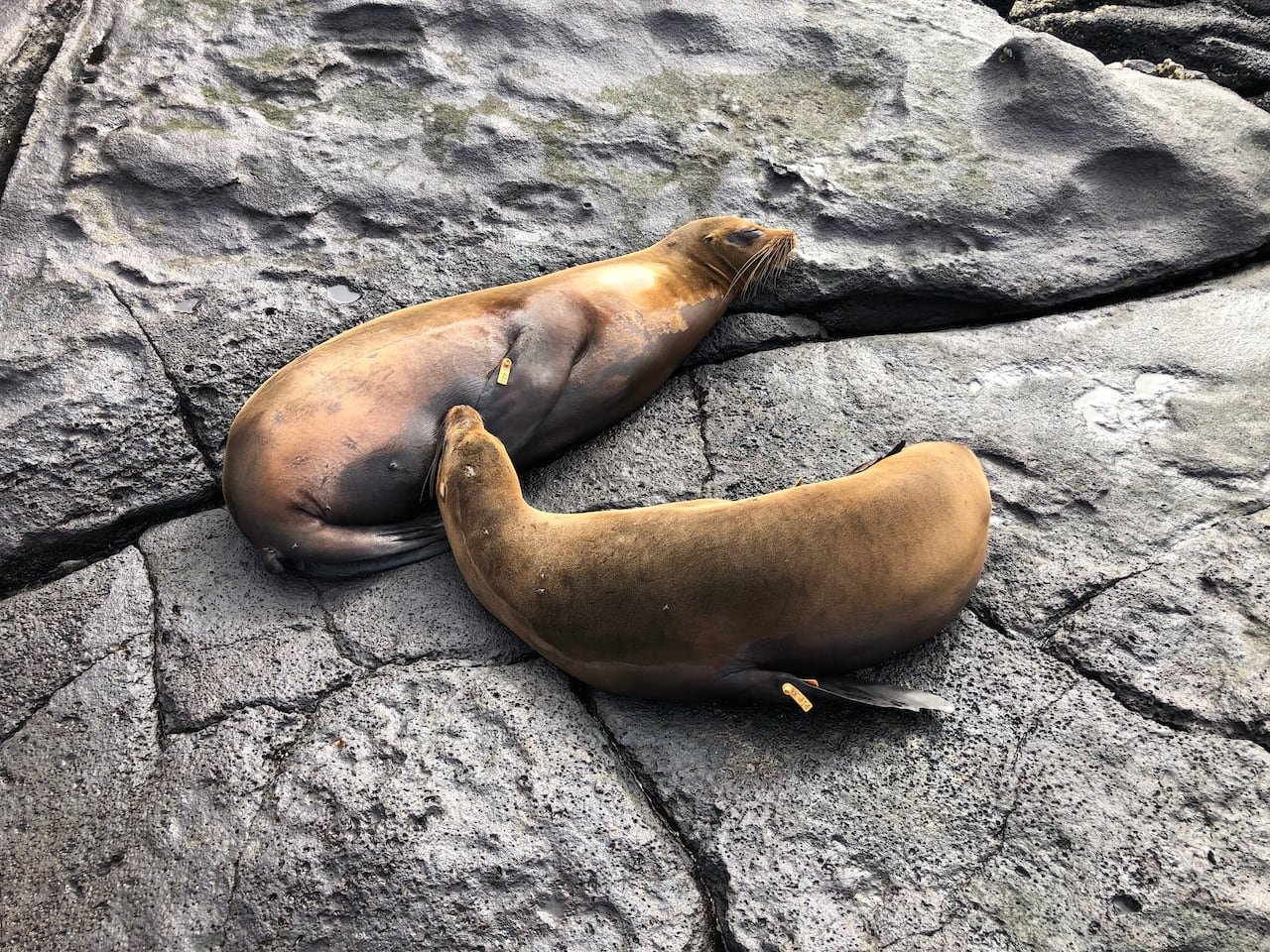
Childs mentioned that the oldest observed sea lion still suckling was 16 years old, an exceptional case rather than the norm.
“That’s like a person in their 60s still breastfeeding,” Childs remarked.
Some sea lions even formed what was dubbed “multigenerational suckling trains,” as reported by the New York Times. These trains involved a sequence of individuals, including a grandmother, mother, and baby, engaged in nursing.
Similar Behaviors in Other Species
Andrew Trites, director of the Marine Mammal Research Unit at the University of British Columbia, noted that such behaviors have been observed in various sea lion species and some seals but are particularly prominent in the Galápagos.
According to Trites, this behavior typically arises from food scarcity, where mothers aim to ensure their offspring’s survival and reproduction by providing continued nourishment.